
I used to kill every plant I owned within a month. Not from neglect the opposite. I’d read “water once a week” on some plant tag, follow it religiously, and end up with mushy, yellowing leaves and roots that smelled like a swamp. Turns out I wasn’t alone overwatering kills far more houseplants than underwatering, mostly because people treat watering like a calendar task instead of something the plant is actually telling you.
So let’s talk about how often to water indoor plants not a one-size-fits-all rule, but what actually changes the answer: the type of plant, the pot, the season, and how much light your home gets.
That advice ignores what actually matters. A snake plant in a dim hallway and a peace lily in afternoon sun have very different water needs, even from the same nursery batch.
A few things that quietly change how fast soil dries out:
Instead of a fixed schedule, check the soil every time. It takes five seconds and makes the difference between a plant that thrives and one that slowly declines.
No fancy tools needed. Stick your finger about an inch or two into the soil.
It sounds too simple to be real advice, but this one habit fixed most of my plant problems.
No table can tell you exactly when to water, since your apartment’s light and humidity aren’t mine. But this gives you a baseline to adjust from using the finger test.
| Plant Type | Watering Frequency | Soil Preference |
|---|---|---|
| Snake Plant | Every 2–3 weeks | Let soil dry out fully |
| Pothos | Every 7–10 days | Slightly dry between waterings |
| Peace Lily | Every 5–7 days | Keep lightly moist |
| Succulents & Cacti | Every 2–4 weeks | Dry completely between waterings |
| Fiddle Leaf Fig | Every 7–10 days | Moist but not soggy |
| Spider Plant | Every 7 days | Evenly moist |
| Money Plant (Jade) | Every 2–3 weeks | Dry out between waterings |
| ZZ Plant | Every 2–3 weeks | Let soil dry fully |
| Ferns | Every 3–5 days | Consistently moist |
Succulents, snake plants, and ZZ plants all sit on the “wait it out” end. If you tend to forget your plants exist for a couple of weeks, these are the ones to buy.
This is the part people forget most. Your plant doesn’t drink the same amount in January as it does in July.
In spring and summer, plants are actively growing more roots, more thirst. Once fall hits and light fades, growth slows to a crawl and the plant needs far less water. I usually cut my watering roughly in half once it cools down.
The most common mistake I see is people keeping up their summer routine through winter a near-guaranteed way to end up with root rot.
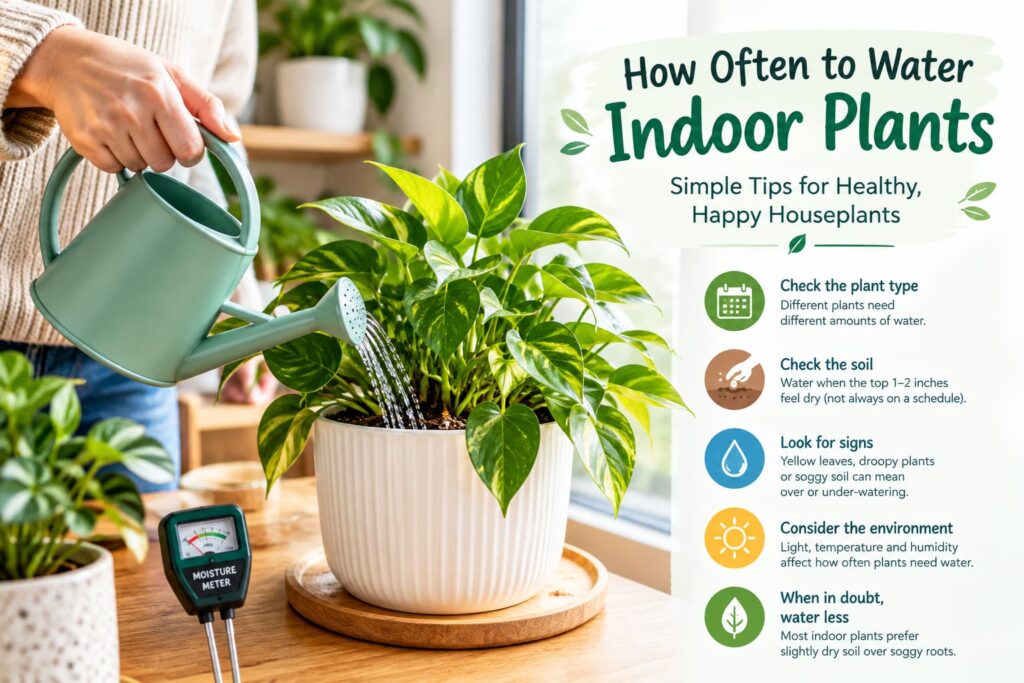
Yellow, soft, mushy leaves are usually the first giveaway. Sometimes you’ll notice a sour smell from the soil, or gnats hovering around the pot a sign it’s been wet too long. Leaves can even drop while the soil’s still soaked, which confuses people into watering more. Don’t. If this sounds familiar, stop watering, let the soil dry out fully, and check your pot has drainage holes.
This one’s easier to spot. Leaf edges go dry and crispy, sometimes curling inward. The soil might shrink away from the pot’s sides. Growth slows or stalls. One trick to tell the difference: an underwatered plant usually perks back up within an hour or two of a good soak. An overwatered one doesn’t.
If you’re also working on soil, our post on best potting soil for indoor plants covers what mix helps with drainage, and if you’ve already got root rot, this guide on spotting and fixing it walks through recovery.
Honestly, there’s no single number that works for every plant, home, or season. It depends on what you’re growing, the pot, the light, and the time of year. What works reliably is checking the soil before you water instead of watering on autopilot. Once that’s a habit, you’ll notice fewer yellow leaves, less root rot, and a lot less worrying about it.
For more research-backed care tips, the Royal Horticultural Society and university extension gardening programs are solid places to double-check anything plant-specific.
1. How do I know if my indoor plant needs water? Check the soil about an inch or two deep. Dry means water it; still moist means wait a few days.
2. Is it better to underwater or overwater indoor plants? Underwatering is safer. Most plants recover from a missed watering, but overwatering often causes root rot, which is harder to fix.
3. Should I water indoor plants every day? No. Daily watering usually leads to waterlogged soil. Most plants only need it once every 5 to 14 days, depending on the type.
4. Do indoor plants need less water in winter? Yes. Growth slows in colder months, so plants absorb less water. Cut watering frequency by roughly half during fall and winter.
5. What’s the best time of day to water indoor plants? Morning is ideal it gives the plant time to absorb moisture before evening, lowering the risk of fungal growth overnight.
Sign up for my newsletter to see new photos, tips, and blog posts.