Category: Vegetable & Herb Garden

There’s nothing quite like eating what you grow. Join me as we figure out the easiest ways to grow fresh, organic veggies and fragrant herbs, whether you have a massive backyard or just a tiny sunny balcony.

  • How to Grow Medicinal Herbs at Home: An Easy Herbal Gardening Guide

    How to Grow Medicinal Herbs at Home: An Easy Herbal Gardening Guide

    A few years back, my grandmother handed me a tiny pot of mint and said, “if you can’t keep this alive, don’t bother with anything else.” Harsh, but fair. Mint is basically impossible to kill, which made it the perfect starting point. That pot eventually turned into a whole windowsill of herbs, and now I can’t imagine cooking — or dealing with a stuffy nose — without reaching for something I grew myself.
    If you’ve ever thought about starting your own herbal garden but assumed you needed a backyard, a green thumb, or some secret know-how, good news: you don’t. Herbal gardening is one of the most forgiving types of gardening, and most medicinal herbs genuinely want to grow. You just have to give them a decent shot.

    Why Bother Growing Your Own Herbs?

    Honestly? Convenience is half of it. Fresh herbal plants on your kitchen counter beat dried, dusty stuff from a jar every time — both in flavor and in whatever natural remedies you’re making. Chamomile for a rough night, mint for an upset stomach, basil because it makes everything taste better. There’s also something satisfying about snipping a leaf off a plant you grew instead of running to the store.

    And it’s cheap. A packet of seeds costs less than one bunch of fresh herbs at the grocery store, yet it’ll keep producing for months, sometimes years if you treat it right.

    What You Actually Need to Get Started

    Forget elaborate setups. Most kitchen herbs and medicinal plants only need three things: decent light, well-draining soil, and a pot with drainage holes. That’s really it.

    A sunny windowsill — south or west-facing works best — handles most herbs fine. No backyard? No problem. Plenty of people run an entire organic herbs collection from a balcony or a sunny indoor corner.

    For soil, skip heavy garden dirt. A light, well-draining potting mix keeps roots from sitting in soggy conditions, the fastest way to kill a young herb plant. Toss in a bit of compost for a nutrient boost, though it’s not strictly necessary to begin with.

    Best Medicinal Herbs for Beginners

    Some herbs are just easier than others, especially when you’re new to this. Here’s where to start:

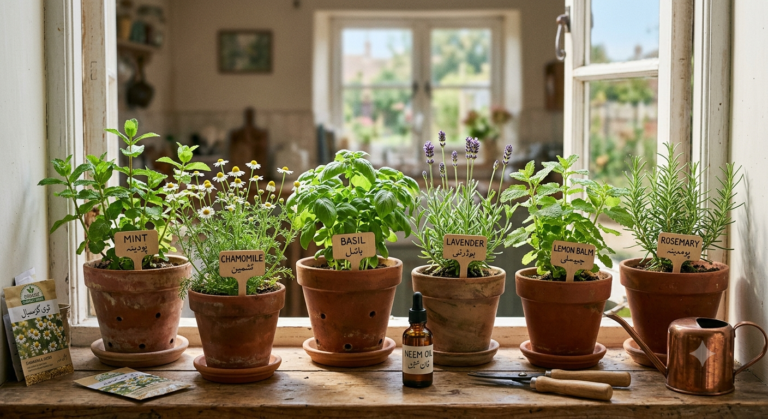
    Mint grows almost aggressively once it’s settled in — plant it in its own pot, though, or it’ll take over everything nearby. Great for teas and digestion.

    Chamomile is gentle, calming, and forgiving if you forget to water it occasionally. Dry the flowers for tea once they bloom.

    Basil loves warmth and sunlight, doubles as a kitchen staple, and has mild anti-inflammatory properties worth knowing about.

    Lavender takes a bit more patience but rewards you with calming, fragrant blooms useful for relaxation and sleep.

    Lemon balm is practically indestructible and works well for easing stress or settling an anxious stomach.

    Start with two or three of these rather than going all in on ten varieties at once. It’s easier to learn their individual quirks that way.

    A Simple Step-by-Step Herbal Gardening Guide

    If you’re following this as a herbal gardening guide for beginners step by step at home, here’s roughly how it goes:

    Pick your herbs based on what you’ll actually use — there’s no point growing something that’ll just sit there. Choose pots with drainage holes, fill them with a light potting mix, and plant either seeds or small starter plants from a nursery. Starter plants are honestly easier if you’re impatient like me.

    Water when the top inch of soil feels dry, not on some rigid schedule. Overwatering kills more herbs than neglect ever does. Place your pots somewhere they’ll get at least four to six hours of sunlight daily, rotating them occasionally if light only hits from one side.

    Once your plants are established, start harvesting lightly and regularly. Most herbs actually grow bushier and healthier the more you trim them, which feels counterintuitive until you see it happen.

    Common Mistakes That Trip Beginners Up

    Overwatering tops the list, by a mile. Soggy soil leads to root rot faster than expected, especially indoors where airflow is limited.

    Cramming too many plants into one small pot is another classic mistake — herbs need room to breathe and spread their roots.

    And skipping sunlight checks. A spot that looks bright to your eyes might not give plants the hours of direct light they need. If herbs start looking leggy or pale, that’s usually the first clue.

    Caring for Your Herb Garden Long-Term

    Once things are growing, care gets pretty low-maintenance. Trim regularly to encourage bushier growth instead of leggy stems. Feed occasionally with a diluted organic fertilizer, maybe once a month during growing season. Keep an eye out for pests — a quick wipe with diluted neem oil usually handles most issues before they spread.

    Seasonal changes matter too. Many herbs slow down in winter, so don’t panic if growth stalls for a few months. It’s normal, not a sign you’ve done something wrong.

    Conclusion

    Herbal gardening isn’t as complicated as it looks from the outside. Pick a couple of forgiving herbs, give them light and decent soil, water when they actually need it, and you’ll be surprised how quickly things take off. Whether you’re after fresh kitchen herbs, simple natural remedies, or just the small joy of growing something yourself, this hobby rewards you almost immediately. Start small, stay consistent, and don’t be afraid to let a plant or two fail along the way — that’s just part of learning.

    FAQs

    1. What’s the easiest medicinal herb to grow for beginners? Mint and lemon balm are nearly impossible to kill, making them ideal starting points for anyone new to herbal gardening.

    2. Can I grow medicinal herbs indoors without a garden? Absolutely. Most herbs thrive in pots on a sunny windowsill or balcony, no backyard required.

    3. How often should I water my herb plants? Check the soil first. Water only when the top inch feels dry, rather than sticking to a fixed schedule.

    4. Do herbal plants need special soil? A light, well-draining potting mix works best. Heavy garden soil tends to hold too much moisture and can lead to root rot.

    5. How long does it take for medicinal herbs to grow? Most herbs are ready for light harvesting within 6 to 8 weeks, though this varies depending on the variety and growing conditions.

  • How to Grow Vegetables in Your Home Garden Easily

    How to Grow Vegetables in Your Home Garden Easily

    There’s a specific kind of satisfaction that comes from stepping out to your balcony or backyard and picking something fresh for dinner that you actually grew yourself. No grocery store run comes close to matching that crispness, that flavor, the sense that the food in your hand didn’t sit in a truck for three days first.
    If vegetable gardening feels intimidating as a complete beginner, that’s normal. Worrying about seeds that won’t sprout, pests wrecking weeks of effort, or just not having enough space — all of that’s a pretty common starting point. None of it means you’re bad at this before you’ve even started.

    Setting up a productive kitchen garden doesn’t actually require deep agricultural know-how. A handful of foundational habits cover most of what matters for vegetable gardening at home for a fresh organic food supply. Here’s a practical look at what that actually involves.

    Getting the Soil Right Before Anything Else

    A high-yielding garden starts with the foundation, not the seeds. Vegetables are heavy feeders — they pull a serious amount of nutrients from the ground to push out leaves, flowers, and eventually fruit. Tossing seeds into compacted backyard dirt just won’t get you very far.

    For raised beds or pots specifically, a light, well-draining blend works best. Equal parts quality potting soil, coco peat for holding moisture without turning soggy, and well-decomposed compost give roots what they actually need.

    Compaction kills more gardens than people realize. Roots need oxygen nearly as much as they need water, so packing soil down tight chokes that off entirely. Good soil should feel loose and a little crumbly under your fingers, never dense or muddy.

    Picking Crops That Actually Forgive Mistakes

    Resilient, fast-growing varieties make a much better starting point than anything finicky or high-maintenance. Going straight for the hardest crops first is basically a shortcut to frustration and a half-empty garden by midsummer.

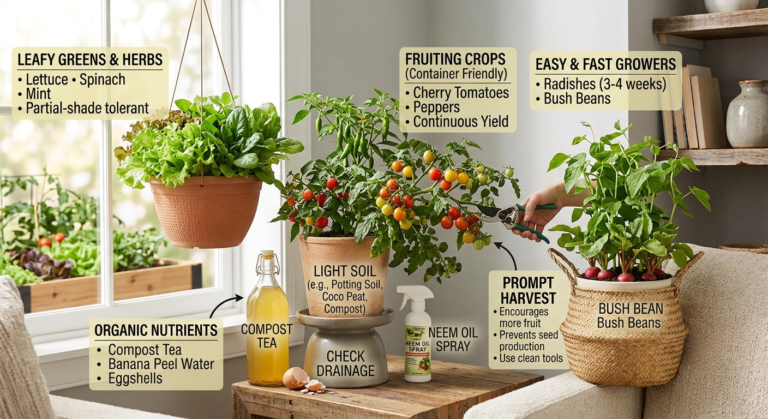
    Leafy greens like spinach, lettuce, and mint grow fast and tolerate partial shade better than most other vegetables. Snipping the outer leaves lets the plant keep producing continuously, which makes them feel almost endlessly productive for the effort involved.

    Radishes deliver something close to instant gratification — ready to harvest in just three or four weeks from sowing. Bush beans pair well alongside them, producing heavily without demanding a full trellis setup to climb.

    Cherry tomatoes and chili peppers round things out nicely for sunny container spots. Both yield steadily through the season and add a genuine pop of color to whatever setup you’ve put together, balcony or backyard alike.

    Keeping Things Organic Without the Extra Cost

    Avoiding synthetic fertilizers and harsh pesticides keeps a food supply genuinely healthier, and small-scale organic methods at home tend to be cheaper anyway, not more expensive like people sometimes assume.

    Kitchen scraps cover a lot of ground here. Diluted compost tea works well as a general feed, while banana peel water, soaked for a day or two, delivers a solid potassium boost on its own. Crushed eggshells round things out by supplying calcium, which fruiting plants in particular tend to benefit from.

    Pests are just part of gardening, not a sign something’s gone wrong. Reaching for toxic sprays on food you’re planning to eat rarely makes sense when a homemade alternative works nearly as well. A tablespoon of neem oil mixed with a few drops of dish soap in warm water, sprayed on leaves in the evening, keeps most harmful insects at bay without contaminating anything.

    Harvesting in a Way That Keeps Plants Producing

    How vegetables get picked actually affects how long a plant keeps producing, which surprises a lot of beginners who assume harvesting is just the easy, final step.

    Letting mature vegetables sit too long on the plant sends a biological signal to stop flowering and shift focus toward seed production instead. Zucchini, peppers, and beans are especially sensitive to this. Picking promptly and consistently essentially tricks the plant into staying in growth mode longer.

    Tools matter more than people expect too. Tearing vegetables off by hand leaves a ragged wound that fungal disease can slip into easily. A clean, sharp pair of shears or pruners makes a precise cut that heals over far more cleanly.

    Frequently Asked Questions

    What’s the easiest vegetable for a complete beginner to start with?

    Radishes are hard to beat for a first try, mostly because they’re ready in just three to four weeks. That quick turnaround helps build confidence before tackling anything that takes longer to mature.

    Do I need a backyard, or can I grow vegetables in containers?

    Containers work fine for most of what’s covered here. Cherry tomatoes, peppers, leafy greens, and bush beans all do well in pots, as long as there’s decent sunlight and proper drainage.

    How do I keep pests away without using harmful chemicals on food I’m going to eat?

    A homemade neem oil and dish soap spray handles most common pests effectively. Applying it in the evening avoids harming beneficial insects that are more active during daylight hours.

    Why did my zucchini or pepper plant stop producing new vegetables?

    Letting fruit sit too long on the vine is the usual cause. Once a plant senses mature fruit isn’t being harvested, it shifts energy toward seed production instead of growing new flowers.

    Is organic gardening really as productive as using chemical fertilizers?

    For most home gardens, yes. Things like compost tea and eggshells supply real nutrients steadily over time, often producing healthier, more resilient plants than a quick chemical boost would.

    Conclusion

    Building a steady supply of home-grown food isn’t about running some flawless backyard operation right from the start. It’s mostly about connecting with the process — starting with two or three manageable crops and paying attention to how they respond to sun, water, and whatever else comes up along the way.

    The first meal made with herbs or vegetables you actually grew yourself tends to make the whole effort feel worthwhile instantly. Grab a few containers, get the soil right, and take that first simple step toward growing at least some of your own food.

  • How to Build a Productive Home Gardening Setup

    How to Build a Productive Home Gardening Setup

    Keeping a few pretty pots alive on a windowsill is one thing. Building an actual productive home garden, the kind that hands you fresh basil for dinner or cherry tomatoes whenever you want them, is a different project entirely. A setup like that doesn’t just sit there looking nice. It works for you — herbs ready when needed, vegetables you didn’t have to buy, a small self-sustaining loop running right outside your door.

    If you’re picturing a sprawling backyard or some rural homestead as a prerequisite, drop that idea. With a decent strategy, even a tiny corner of space can turn into something that actually produces.

    This breaks down a practical home gardening setup for small spaces, built for beginners who want results without years of trial and error first.

    Thinking Like an Urban Gardener

    Traditional rows in the ground usually aren’t an option when space is tight, which is exactly where urban gardening strategies earn their keep. Working with a small footprint means getting a little creative about how that space actually gets used.

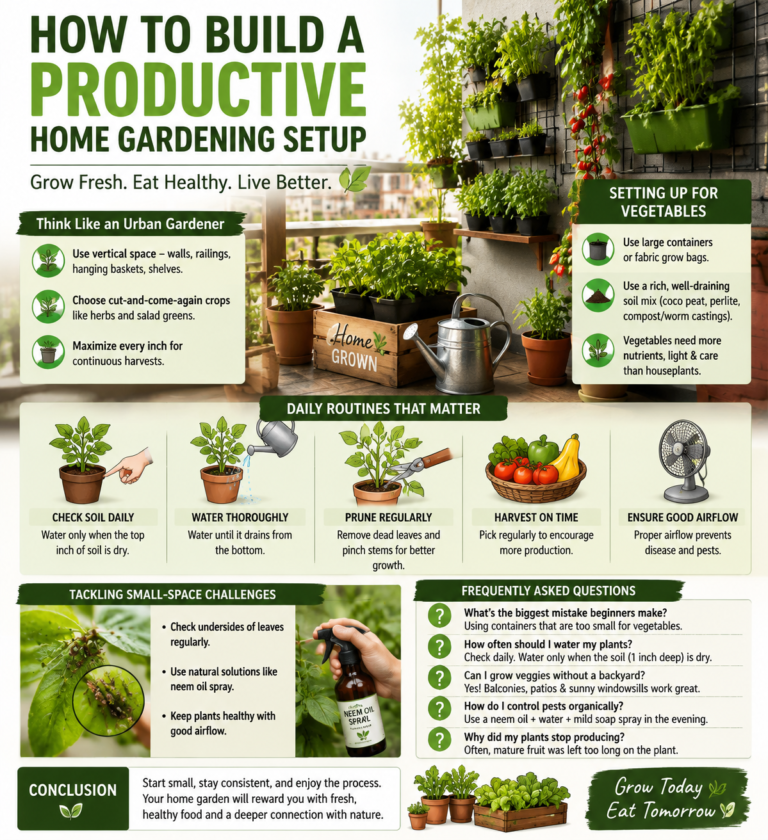
    Walls and railings count as growing space too, not just the floor. Vertical planters, hanging baskets, wall-mounted shelves — any of these can roughly triple how much you’re able to grow without adding a single square foot of floor area.

    Crop choice matters more than people expect going in. A head of iceberg lettuce gets harvested once, and that’s it, done. “Cut-and-come-again” salad greens work differently — snip the outer leaves and the plant just keeps producing more, all season long. In a small setup, that kind of repeat-yield crop is worth far more than something you harvest a single time.

    Setting Up for Vegetables, Specifically

    Growing actual food is genuinely satisfying, but vegetables ask for more planning than a basic houseplant ever would. These are high-energy plants, meaning they burn through resources fast and need the right setup to actually produce a harvest worth eating.

    Container size trips up more beginners than almost anything else. Cramming a tomato or pepper seedling into a small pot leads to a root-bound plant that stalls out and stops producing entirely. Fabric grow bags solve this well — lightweight, breathable, and they tend to encourage genuinely healthy root systems compared to plastic pots.

    Soil deserves real attention, too. Skip the cheap, dense topsoil sold in bulk bags. A homemade mix works better — coco peat keeps moisture where roots can reach it, perlite handles drainage so things don’t get waterlogged, and a good compost or worm castings keep feeding the plant steadily over time instead of all at once. None of this is complicated to put together once you know the ratio.

    Keeping It Alive: Daily Routines That Actually Matter

    Setting everything up is honestly the easy part. Keeping it productive long-term is where most beginners drop off, mostly because they either overdo it or forget entirely.

    Small containers dry out fast, much faster than soil in the ground does. Checking daily makes a real difference here. Push a finger into the soil up to the first knuckle — dry down there, water it; still damp, leave it alone for another day.

    When watering does happen, do it properly. Water until it’s actually running out the drainage holes at the bottom, not just a quick splash on top. This pushes roots to grow deeper instead of staying shallow and fragile near the surface.

    Pruning matters more than most beginners realize, too. Pinching off dead leaves and yellowing stems keeps a plant’s energy focused where it’s actually useful. For tomatoes and basil specifically, trimming the top clusters forces the plant to branch outward and produce more, rather than just growing tall and thin.

    Harvesting on time plays into this as well. Zucchini, peppers, and beans in particular tend to just stop producing if mature fruit sits too long on the vine. Picking early and picking often essentially tells the plant to keep going.

    Dealing With the Problems Tight Spaces Create

    Packing plants close together in a small urban setup tends to bring two recurring headaches — pests and airflow that’s worse than it should be.

    Check the undersides of leaves regularly, since that’s where bugs like aphids or spider mites usually hide first. Chemical sprays tend to wipe out beneficial insects along with the bad ones, so they’re rarely worth it. A homemade mix of water, neem oil, and a little dish soap, sprayed in the evening, handles most common pests without wrecking an otherwise organic setup.

    Frequently Asked Questions

    What’s the biggest mistake beginners make with a small-space garden? 

    Undersized containers, easily. A tomato or pepper crammed into a pot that’s too small becomes root-bound fast and basically stops producing. Going slightly bigger than feels necessary almost always pays off later.

    How often should I actually be watering my container plants? 

    No fixed schedule works for everyone — check the soil daily instead. If a finger is pushed an inch in, it comes out dry; water thoroughly until it runs from the bottom. If it’s still damp, skip that day entirely.

    Can I really grow vegetables successfully without a backyard? 

    Yes, genuinely. Balconies, patios, and even a sunny windowsill ledge can support a surprising amount of food production with the right containers and crop choices. Vertical space often gets overlooked, but it adds a lot of capacity.

    What’s a good organic way to deal with pests without harming my harvest?

    A simple spray of water, neem oil, and a few drops of mild dish soap handles most common pests effectively. Applying it in the evening, rather than midday, avoids harming pollinators that are active during the day.

    Why did my zucchini or pepper plant suddenly stop producing? 

    Letting mature fruit sit too long on the vine is the usual culprit. These particular plants tend to slow down or stop entirely if they’re not harvested regularly, since the plant senses it’s already “succeeded” and stops investing energy in new growth.

    Conclusion

    A productive home garden doesn’t need to be perfect from the very first day. It’s really about building a framework that works. Start with a handful of reliable crops, then spend time learning how your specific space responds to sun, wind, and whatever else nature throws at it along the way.

    The first time you pick your own cherry tomatoes or toss fresh basil into a dish you’re cooking, the whole effort suddenly feels worth it. Take it one container at a time. Build a routine that actually fits your life, not someone else’s, and let growing your own food unfold at whatever pace feels right.