
Growing broccoli without synthetic fertilizers or chemical sprays isn’t harder it just asks for a bit more attention early on. Once the soil is right and you’ve got a rhythm going with watering and pest checks, organic broccoli actually tends to be more forgiving than people expect. The plant just wants steady conditions, not perfect ones.
Here’s how to get there, from soil to harvest, without reaching for anything synthetic.
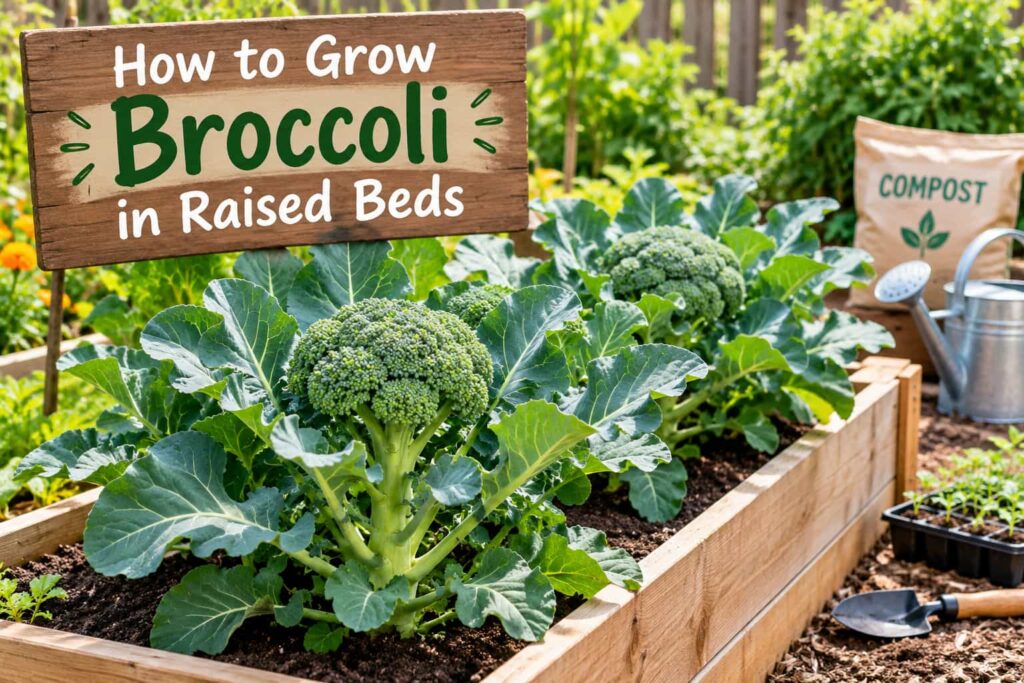
Organic growing really comes down to feeding the soil rather than the plant directly, and broccoli rewards that approach more than most vegetables. Work in a generous amount of well-rotted compost or aged manure before planting this is where most of the plant’s nutrition will come from over the season. Aim for a soil pH between 6.0 and 7.0. If your soil tests off on either end, more compost is usually the simplest fix rather than reaching for a bagged amendment.
A loose, well-draining bed matters too. Broccoli roots spread wide but stay fairly shallow, so compacted soil holds them back more than people realize.
Look for untreated, organic-certified seed if you want to keep things fully chemical-free from the start treated seed is often coated with fungicide. Broccoli is a cool-season crop, so timing is everything:
Planting during a heatwave is one of the most common reasons organic broccoli bolts early the plant panics a bit and rushes to flower instead of forming a full head.
Give each plant 18–24 inches of space. Crowding doesn’t just limit head size it also creates the damp, still air that pests and fungal problems love. This is where organic growing leans on a few extra tricks instead of a spray bottle: planting dill, marigolds, or nasturtiums nearby draws in beneficial insects and can help confuse the pests that would otherwise beeline for your broccoli. Avoid planting near tomatoes or strawberries, which compete for similar nutrients and don’t pair well in the same bed.
Broccoli needs about 1 to 1.5 inches of water a week, and consistency matters more than the exact amount. A layer of straw or wood chip mulch around the base helps enormously here it keeps moisture even, suppresses weeds without herbicide, and slowly breaks down to feed the soil. Drip irrigation or a soaker hose is worth setting up if you can, since it keeps water at root level and keeps the leaves dry, which cuts down on mildew.
Broccoli is a hungry plant, so a single dose of compost at planting time usually isn’t enough on its own. Side-dress with compost or an organic nitrogen source blood meal, feather meal, or fish emulsion all work roughly every three to four weeks, tapering off once the heads start forming. Overdoing nitrogen late in the season tends to push leafy growth at the expense of the head, so it’s better to ease off than pile on.
Cabbage worms and aphids are the two you’ll run into most. A few approaches that don’t involve synthetic pesticides:
Rotating where you plant brassicas each year also helps break pest and disease cycles that build up in the soil over time.
Cut the central head once it’s tight, firm, and deep green before the small buds loosen or start showing yellow. Use a sharp knife and cut at an angle a few inches below the head. Leave the plant in place afterward; most varieties keep producing smaller side shoots for weeks, which is a nice stretch of bonus harvest for very little extra effort.
| Growing Factor | Recommended Range |
|---|---|
| Ideal Temperature | 60°F – 75°F |
| Soil pH | 6.0 – 7.0 |
| Plant Spacing | 18–24 inches |
| Watering | 1–1.5 inches/week |
| Feeding Interval | Every 3–4 weeks (compost/organic nitrogen) |
| Days to Harvest | 55–80 days after transplant |
Most of these are easy to avoid once you know to look out for them they’re just the kind of thing that only becomes obvious after a season of trial and error.
Is it harder to grow broccoli organically than with synthetic fertilizers? Not really it just shifts the effort earlier, into building good soil with compost, rather than relying on quick-release fertilizers later.
What’s the best organic fertilizer for broccoli? Compost is the foundation, with side dressings of blood meal, feather meal, or fish emulsion during the growing season for an extra nitrogen boost.
How do I control cabbage worms without pesticides? Row covers early on, plus Bt spray or hand-picking if you spot damage. Between the three, most infestations stay manageable.
Can I use neem oil on broccoli? Yes, neem oil is commonly used in organic growing to manage aphids and other soft-bodied pests, and it’s gentle enough not to wipe out beneficial insects.
Why does organic broccoli sometimes grow smaller heads? Usually it comes down to under-feeding or inconsistent watering rather than the “organic” part itself with enough compost and steady moisture, organic broccoli can produce heads just as large as conventionally grown plants.
Organic broccoli growing isn’t about doing without it’s about working with the soil and a few smart habits instead of reaching for a quick chemical fix. Build the soil up with compost, stay consistent with water and mulch, and get ahead of pests with row covers before they become a problem. Do that, and you’ll likely find organic broccoli holds up just as well as anything grown conventionally. For more on setting up beds the organic way, take a look at our organic raised bed gardening guide on this site.
External References:
Note: Replace the placeholder internal link (marked with # ) with your own site’s actual URL before publishing.
Sign up for my newsletter to see new photos, tips, and blog posts.