
Starting broccoli from seed always felt like a hassle to me trays, grow lights, the whole setup. A few seasons ago I just grabbed a six-pack of seedlings from the local nursery instead, and honestly, it made the whole process about ten times less stressful. If you’re short on time or don’t have a good spot for seed trays indoors, starting from seedlings is a completely valid shortcut, not a lesser one.
This guide covers what actually matters once you’ve got seedlings in hand picking good ones, transplanting them properly, and keeping them alive long enough to actually form heads. If you’re new to vegetable gardening in general, our beginner gardening guide covers the basics that apply beyond just broccoli.
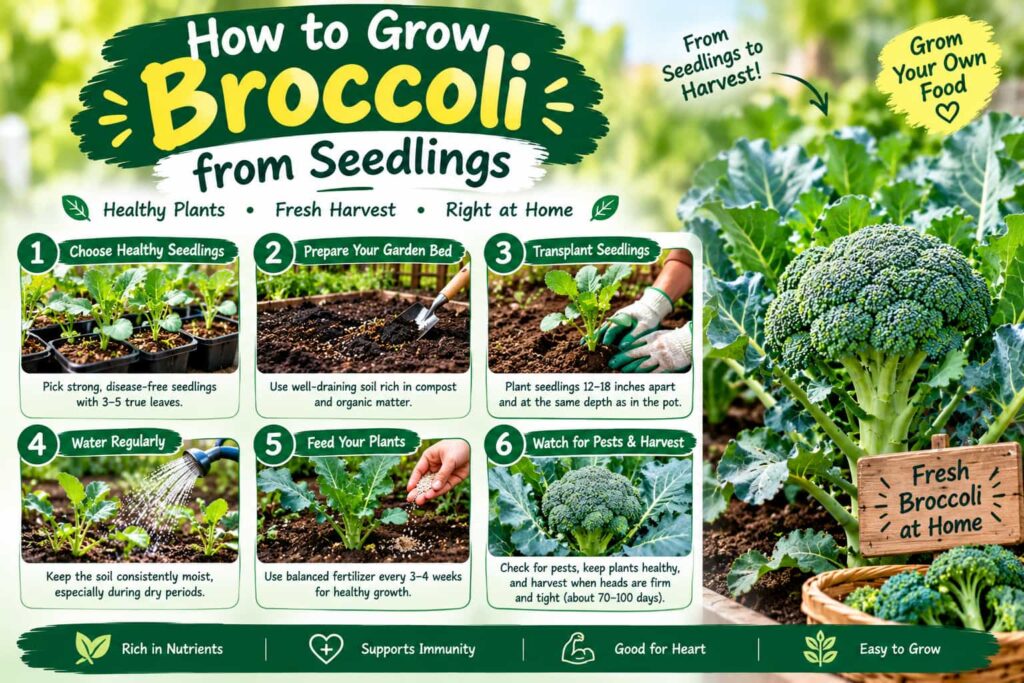
Not all seedlings at the garden center are created equal, and starting with a weak one makes everything harder down the line. Look for seedlings that are short and stocky rather than tall and leggy a leggy seedling usually means it was stretching for light and will struggle once it’s out in full sun. The leaves should be a deep, even green, not yellowing or spotted.
It’s also worth checking the roots if you can. Gently slide one out of its container roots should look white and fibrous, not a dense, tangled mass circling the pot. Root-bound seedlings take longer to establish once transplanted.
Broccoli is a cool-season crop, which means it does best when it matures before real summer heat hits, or after it’s passed in the fall. Transplanting seedlings outdoors typically happens 2 to 3 weeks before your area’s last expected frost in spring, or in mid-to-late summer for a fall crop. Planting during a hot stretch is probably the single biggest reason seedlings struggle or bolt early.
| Step | What to do | Notes |
|---|---|---|
| 1. Harden off | Set seedlings outside a few hours a day for about a week | Skip this and they may go into shock |
| 2. Prep the bed | Work compost into the soil, loosen it 6–8 inches deep | Broccoli likes rich, well-draining soil |
| 3. Space properly | Dig holes 18–24 inches apart | Crowding leads to smaller heads |
| 4. Transplant | Set seedlings so the base of the stem sits at soil level | Don’t bury the stem too deep |
| 5. Water immediately | Soak thoroughly right after planting | Helps roots settle in |
| 6. Mulch | Add a layer of mulch around the base | Keeps moisture steady, blocks weeds |
| 7. Monitor first week | Check daily for wilting or pest damage | New transplants are most vulnerable now |
| 8. Feed | Apply a balanced fertilizer a few weeks in | Supports steady head development |
None of these steps take long individually. The whole transplant process for a handful of seedlings usually takes less than an hour once the bed is prepped.
Seedlings are at their most fragile right after they go into the ground. Keep the soil consistently moist during this stretch not soaked, just reliably damp since the roots haven’t spread out enough yet to handle any dry spells. A light shade cloth for the first couple of days can help if it’s unusually sunny or windy, though it’s not strictly necessary in milder conditions.
According to Penn State Extension, broccoli transplants establish best when soil moisture is kept consistent in the first two weeks after planting, since inconsistent watering during this period is one of the more common causes of poor head development later on.
Yellowing lower leaves shortly after transplant are usually just transplant shock and tend to resolve within a week or so not necessarily a sign of a bigger problem. If yellowing continues past that or spreads upward, it’s more likely a nitrogen deficiency, which a balanced fertilizer usually fixes.
Seedlings that flop over or wilt badly in the first few days, despite watering, often weren’t hardened off properly. There’s not always a fix once shock sets in badly, but most seedlings do recover if you keep them watered and give them time.
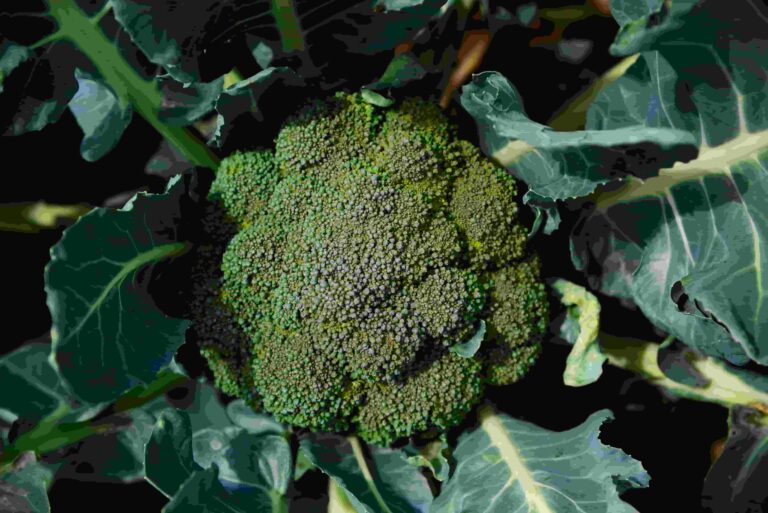
From transplant to harvest usually runs about 55 to 70 days, depending on the variety. Look for a tight, compact head that’s still deep green once you start seeing small yellow buds opening within the head, it’s past its best point and should be cut immediately. Leave the plant in the ground afterward, since most varieties will keep sending up smaller side shoots for weeks.
Growing broccoli from seedlings cuts out a lot of the fuss involved in starting from seed, without cutting corners on the end result. The real keys are picking sturdy, healthy starts, timing the transplant around cool weather, and staying consistent with water for that first vulnerable week. Get those right and the rest mostly takes care of itself. For a side-by-side look at starting from scratch instead, see our guide on growing broccoli from seed.
1. Is it better to grow broccoli from seed or from seedlings? Neither is objectively better seedlings save time and reduce risk for beginners, while seeds are cheaper and offer more variety options.
2. How do I know if a broccoli seedling is healthy before buying it? Look for short, stocky growth, deep green leaves, and white, fibrous roots rather than a tangled, root-bound mass.
3. Can I transplant broccoli seedlings in hot weather? It’s not recommended. Broccoli seedlings transplanted during hot stretches are more likely to bolt or struggle to establish properly.
4. How often should I water newly transplanted broccoli seedlings? Keep the soil consistently moist for the first one to two weeks, watering whenever the top inch of soil starts to feel dry.
5. Why are my broccoli seedlings turning yellow after transplanting? Mild yellowing right after transplant is usually just shock and clears up within a week; persistent yellowing often points to a nutrient deficiency.
Sign up for my newsletter to see new photos, tips, and blog posts.