
My first attempt at growing broccoli was a disaster. I planted the seeds directly in the ground in the middle of summer, wondered why nothing happened, and eventually gave up and blamed the soil. Turns out broccoli is a cool-weather crop and I’d basically tried to grow it during the worst possible season for it.
Once I actually understood the timing and a few basic habits, it stopped being complicated. This guide is what I wish someone had handed me before that first failed attempt. If you’re just getting into growing your own food, it pairs well with a broader beginner vegetable gardening guide.
Broccoli likes cool weather it actually starts to struggle and “bolt” (flower too early, which ruins the head) once temperatures climb into the high 70s and above. That means the trick isn’t really about soil quality or watering technique, it’s about getting the timing right so the plant matures during a cool stretch.
Most gardeners start broccoli either in early spring for a summer harvest, or in mid to late summer for a fall harvest. Starting seeds indoors gives you a head start before outdoor conditions are even ready, which is usually the safer bet if your seasons swing hot fast.
Nothing here is expensive or hard to find. A few seed trays or small pots, seed starting mix (not regular garden soil, it’s too dense), broccoli seeds, and a sunny windowsill or grow light. That’s genuinely most of it.
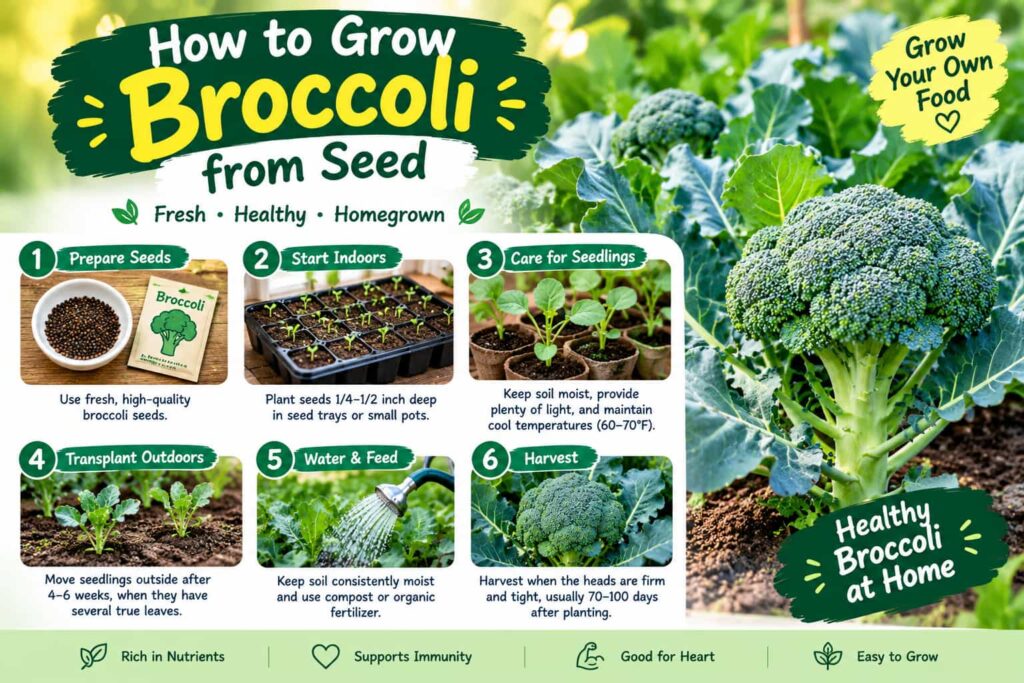
| Step | What to do | Roughly when |
|---|---|---|
| 1. Start indoors | Sow seeds ¼ inch deep in seed starting mix | 6–8 weeks before last frost |
| 2. Keep it warm | Maintain soil temp around 70°F for germination | First week |
| 3. Give it light | Move to a sunny spot or grow light once sprouted | Once seedlings emerge |
| 4. Thin seedlings | Keep the strongest one per cell, snip the rest | 2 weeks in |
| 5. Harden off | Set seedlings outside for a few hours a day, gradually longer | 1–2 weeks before transplanting |
| 6. Transplant | Move to garden bed, space 18–24 inches apart | After hardening off |
| 7. Water consistently | Keep soil moist, not soggy, especially as heads form | Ongoing |
| 8. Harvest | Cut the main head before flowers open | 55–70 days after transplant |
That’s really the whole process laid out. The steps aren’t complicated individually it’s more about not skipping the timing on any of them.
Skipping the hardening off step is a common one. Seedlings that go straight from a cozy windowsill to full outdoor sun and wind often get shocked and stall out for a week or two. Even a few days of gradually introducing them to outside conditions makes a noticeable difference.
Spacing is another one. It’s tempting to cram plants close together, especially in a small garden, but broccoli needs room to spread its leaves and develop a proper root system. Crowded plants tend to produce smaller, less impressive heads.
Watering inconsistently is probably the biggest one though. Broccoli wants steady moisture, not a flood-then-drought cycle. According to Cornell University’s Cooperative Extension, broccoli requires consistent watering throughout the growing season, and irregular watering during head formation can lead to smaller, loosely formed heads.
Cabbage worms and aphids are the usual suspects on broccoli. A floating row cover over young plants keeps most egg-laying moths away without needing any spray at all. If you do spot worms, picking them off by hand works fine for a small home garden it’s not glamorous, but it’s effective and doesn’t involve chemicals near food you’re about to eat.
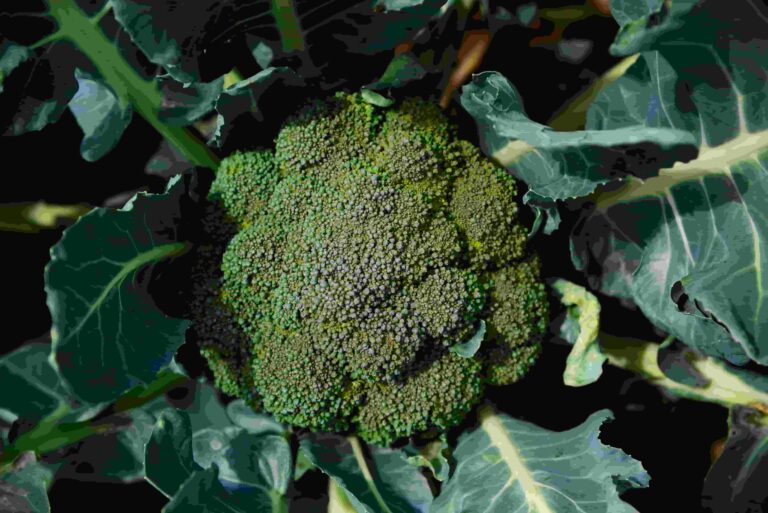
This is where a lot of first-timers get it wrong, myself included. The main head should be harvested while it’s still tight and green, before the small yellow flower buds start opening up. Once it flowers, the texture turns woody and bitter fast. Cut the main head with a few inches of stem, and don’t pull the whole plant many varieties will keep producing smaller side shoots for weeks afterward, which is a nice bonus most people don’t expect.
Growing broccoli from seed really comes down to respecting its love of cool weather and being consistent with watering and spacing. None of it requires special equipment or a green thumb you were born with it’s mostly just getting the timing right and not rushing the transplant stage. Once you’ve got one successful round down, it becomes a lot less intimidating for the next season. For more crops that follow a similar cool-season rhythm, check out our fall vegetable planting guide.
1. How long does broccoli take to grow from seed to harvest? Roughly 70 to 100 days total, counting both the indoor seed-starting period and the time in the garden after transplanting.
2. Can I plant broccoli seeds directly in the ground instead of starting indoors? Yes, though starting indoors usually gives more reliable results, especially if your growing season has a short cool window.
3. Why did my broccoli flower before forming a proper head? This is called bolting, and it usually happens when temperatures get too warm too early or the plant experiences stress like drought.
4. Does broccoli need full sun to grow well? Yes, it needs at least 6 hours of direct sunlight a day, though it tolerates slightly cooler and shadier conditions better than many summer vegetables.
5. Can I get more than one harvest from a single broccoli plant? Yes, after cutting the main head, most plants continue producing smaller side shoots for several more weeks if you keep watering and feeding them.
Sign up for my newsletter to see new photos, tips, and blog posts.