
A neighbor of mine once told me broccoli just “doesn’t do pots” too big, too fussy, not worth it. She’d tried it once with whatever seedling the garden center had that week, and it bolted before forming a proper head. The pot wasn’t really the problem. The variety was. Switch to a compact type bred for small spaces, and her second try worked out fine.
That’s the piece a lot of guides skip. Pot size matters, sure, but which broccoli you’re growing in that pot matters just as much. Here’s what I’d tell anyone starting from scratch.
Standard broccoli varieties, the kind bred for open fields, can get large and root-hungry. In a pot, that translates to a plant fighting for space it doesn’t have. Compact or fast-maturing cultivars handle that limitation much better, and a few even lean into it by producing extra side shoots instead of one big central head.
| Variety | Why It Works in a Pot |
|---|---|
| Di Cicco | Heirloom, compact, produces a modest head followed by plenty of side shoots |
| Waltham 29 | Cold-hardy, reliable in cooler container conditions |
| Packman | Fast-maturing with fairly uniform heads |
| Belstar | Handles heat a bit better than most, useful in warmer climates |
| Sprouting/broccolini types | Skip the big central head entirely, just keep producing smaller shoots |
If you’re not sure which one to grab, sprouting varieties are honestly the easiest starting point for pots they’re more forgiving, and you get a longer harvest window instead of one big payoff moment that can go wrong.
Once the variety’s sorted, the pot itself is fairly straightforward. Go with something around 12–18 inches wide and at least 12 inches deep for one plant a standard 5-gallon container covers that. Drainage holes at the bottom aren’t optional; broccoli roots sitting in soggy soil tend to rot before they ever get the chance to feed the plant properly.
Light-colored pots are worth choosing over dark ones if you can. Dark plastic soaks up heat fast, and broccoli’s whole deal is that it hates getting too warm. Terra cotta looks nice too, though it dries out quicker than plastic, so you’ll be watering a bit more often either way.
Fill it with a potting mix that’s got some compost worked into it rather than plain garden soil, which tends to compact and drain badly once it’s confined to a container.

Broccoli in a pot needs more hands-on attention than the same plant in a garden bed, mostly because there’s a fixed amount of soil holding both water and nutrients. Check the soil regularly daily in warm weather isn’t overkill. Top inch feels dry? Water it.
Feeding matters here too. A fertilizer worked in every few weeks keeps the plant from running out of steam partway through. A lot of pot-grown broccoli quietly underperforms this way the plant doesn’t die, it just never reaches full size because it’s living off a limited soil supply with no top-up.
If you’ve got room, a few companion plants alongside broccoli can help more than you’d expect. Herbs like dill, rosemary, and chamomile tend to get along well and can discourage some of the pests that go after brassicas. What you want to avoid nearby is strawberries, tomatoes, or pole beans they compete for the same resources and don’t play well with broccoli’s root habits.
Cabbage worms and aphids are the usual suspects on any brassica, potted or not. Since a pot is small and easy to check, glance under the leaves every few days rather than waiting for an obvious problem. A floating row cover over young plants heads off a lot of this before it starts, no spraying needed.
For a broader look at getting the timing and season right, our guide on how to grow broccoli in a garden and our piece on pot sizing and watering for container broccoli both cover ground that complements the variety-and-care angle here.
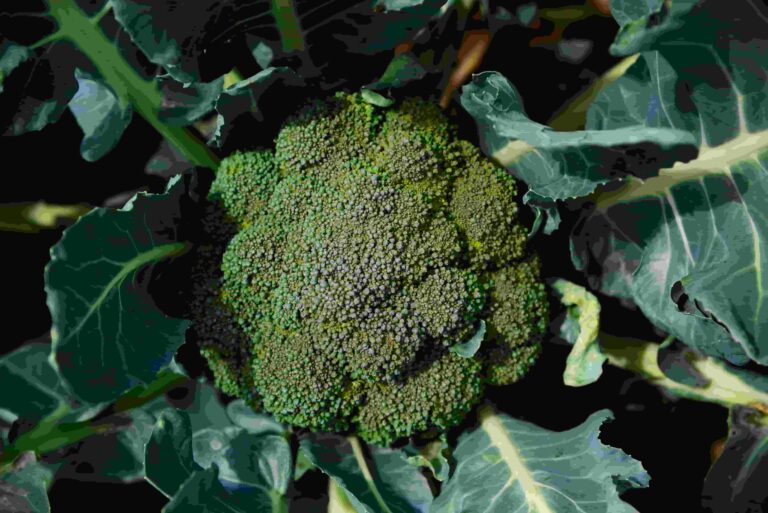
Harvest the central head (if your variety grows one) while the buds are still tight and dark green. Cut it about five to six inches below the head. After that, leave the plant where it is most varieties keep sending up smaller side shoots for weeks, which stretches one pot into several rounds of harvest.
Which broccoli variety is best for growing in a pot? Compact, fast-maturing types like Di Cicco or Waltham 29 tend to do best, since they don’t need as much root space as standard field varieties. Sprouting broccoli is another solid, forgiving option.
How big should the pot be for one broccoli plant? Around 12–18 inches wide and at least 12 inches deep, or roughly a 5-gallon container. Bigger is generally better than borderline.
Can I grow more than one broccoli plant in the same pot? Only if the container is significantly larger, like a half-barrel, with plants spaced 12–18 inches apart. Standard 5-gallon pots really only suit one plant.
Why did my potted broccoli bolt before forming a head? Usually heat stress, an unsuitable variety, or a pot too small for the roots. Cooler conditions and a compact cultivar go a long way toward preventing this.
Do potted broccoli plants need fertilizer more than garden ones? Yes, generally. There’s less soil to draw nutrients from in a pot, so regular feeding matters more than it does for the same plant grown in the ground.
Growing broccoli in pots comes down to two things people tend to underweight: picking a variety actually suited to container life, and staying on top of watering and feeding since there’s less soil doing the work. Get those two right, and a pot can produce a genuinely solid harvest no in-ground bed required.
Further reading:
Sign up for my newsletter to see new photos, tips, and blog posts.