

I switched my blueberry patch over to fully organic methods a few seasons ago, mostly because I got tired of reading ingredient labels on fertilizer bags I couldn’t pronounce half of. It wasn’t as complicated as I expected, though it did take a bit more patience than just dumping synthetic feed on the soil and walking away.
If you’re looking into how to grow blueberries organically, the short version is: it comes down to good soil, natural feeding, and staying ahead of pests without reaching for chemical sprays. Here’s how that actually plays out in practice.
Blueberries are one of those crops people genuinely worry about pesticide residue on, since they’re eaten fresh, skin and all. Beyond that:
None of this makes organic growing effortless. It just shifts the effort from “buy a product” to “build a system,” which suits some gardeners more than others.
This is where organic blueberry growing lives or dies, honestly. Blueberries need acidic soil, somewhere in the 4.5 to 5.5 pH range, and most garden soil sits well above that.
Soil AmendmentWhat It DoesHow Often to UsePeat mossLowers pH, holds moistureMixed in at planting, topped up yearlyPine bark mulchSlowly acidifies soil, suppresses weedsRefresh every 6–12 monthsComposted leavesAdds organic matter, improves drainageOnce or twice a yearElemental sulfurGradually lowers pH over monthsAs needed, based on soil test
A soil test before you plant saves a lot of guesswork later. Without one, you’re basically adjusting blind.
Skip the blue crystals. Blueberries respond well to slower, gentler feeding:
Compost worked into the topsoil each spring gives a steady nutrient release without the risk of burning roots the way synthetic fertilizer can.
Composted manure, well-aged rather than fresh, adds nitrogen along with a good dose of organic matter.
Fish emulsion or seaweed extract are useful for a quicker nutrient boost during the growing season, especially if leaves start looking pale.
Coffee grounds, in moderation, can help nudge acidity down, though they’re more of a supplement than a core feeding strategy don’t rely on them alone.
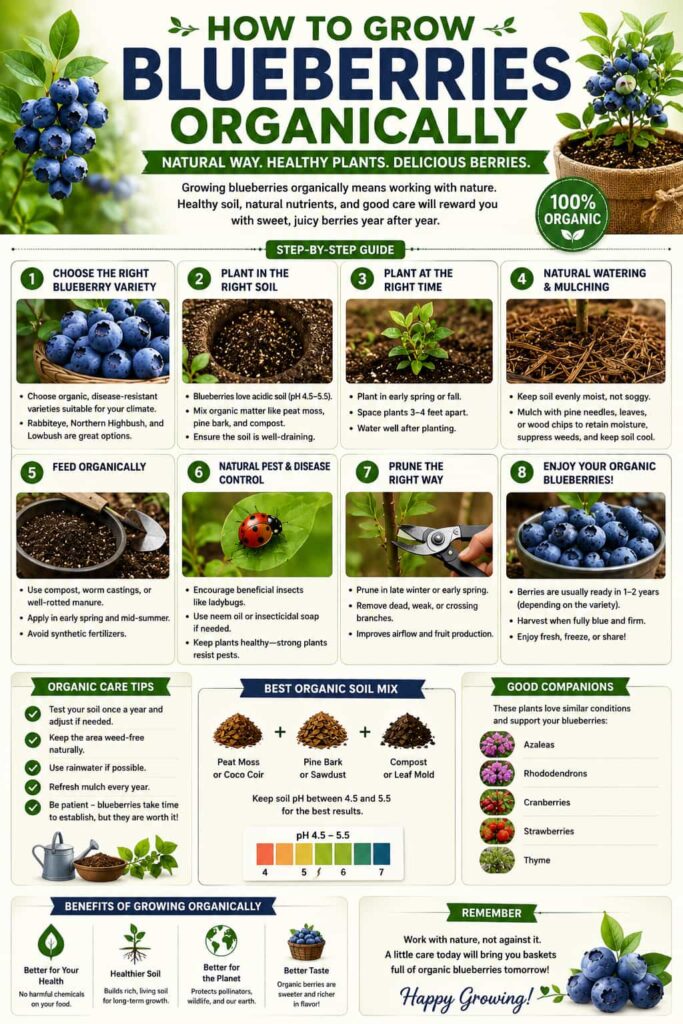
Birds are honestly the bigger threat to your fruit than most insects. Netting over the bushes once berries start ripening solves most of that problem without a single spray.
For the actual pest insects aphids, spotted wing drosophila, and the occasional beetle a few things help:
If you’re dealing with a specific pest problem that’s gotten out of hand, our organic pest control guide for berry gardens goes into more detail than fits here.
A thick layer of mulch, pine bark or wood chips work well, does double duty: it suppresses weeds and slowly breaks down to feed the acidic soil blueberries want. Hand-pulling the occasional weed that gets through beats using an herbicide anywhere near a food crop, and honestly it’s not much extra work once the mulch layer is doing most of the heavy lifting.
Blueberries have shallow root systems, so they dry out faster than you’d think. Deep, less frequent watering encourages roots to grow downward rather than staying near the surface. Drip irrigation works particularly well here since it keeps water at the root zone instead of wetting the foliage, which helps avoid fungal problems too.
If you’re starting your patch from scratch and want to expand it without buying more plants, it’s worth reading up on how to grow blueberries from cuttings as an organic-friendly way to multiply your existing bushes.
Is it hard to switch an existing blueberry bush to organic care? Not really, though the soil takes time to adjust. Expect a season or two before you see the full benefit of switching to compost and natural amendments.
What’s the biggest mistake people make growing blueberries organically? Skipping the soil test and guessing at pH. Blueberries are unforgiving if the soil isn’t acidic enough, no matter how good your organic feeding routine is.
Can I use regular compost, or does it need to be a specific type? Regular compost works fine as a base. Just balance it with acidic amendments like pine bark or peat moss, since compost alone tends to be closer to neutral pH.
How do I control pests without any sprays at all? Netting for birds, encouraging beneficial insects, and good garden hygiene (removing fallen fruit, proper spacing) cover most of it. Neem oil is about as close to a spray as most organic growers need.
Do organic blueberries taste different from conventionally grown ones? Many growers report better flavor, though it’s more likely tied to ripeness and soil health than the “organic” label itself. A well-fed, healthy bush tends to produce better fruit either way.
Growing blueberries organically isn’t really about avoiding a list of banned substances, it’s about building soil and a garden ecosystem that supports the plant naturally. Get the pH right, feed with compost and natural amendments, keep the birds and bugs in check without chemicals, and the bushes tend to take care of the rest.
For deeper research on organic soil amendments and pH management, the Oregon State University Extension and Cornell Cooperative Extension both publish solid, science-backed guides worth checking.
Sign up for my newsletter to see new photos, tips, and blog posts.