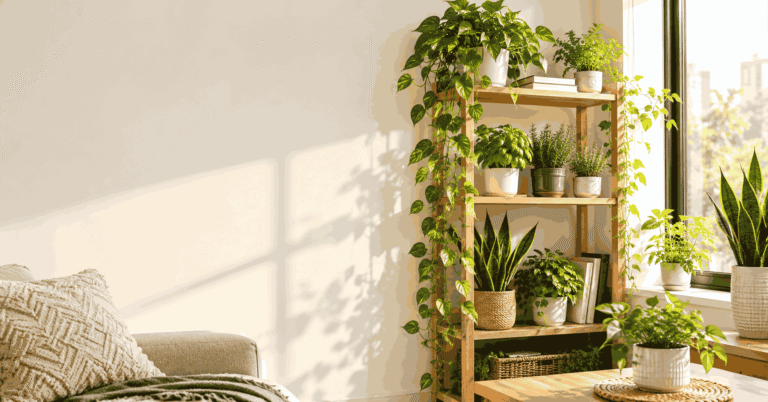

Do you want more green in your home but feel nervous about killing every plant you buy? You are not alone. Most people start with a few mistakes, and that is perfectly normal. The good news is that indoor gardening is much easier than it looks.
In this guide, you will find simple indoor house garden ideas that work in small apartments, bedrooms, and even rooms with little sunlight. No special skills or expensive tools are needed.
Plants make a home feel calm and fresh. They add color, soften empty corners, and give you a small daily routine that feels relaxing. Some people also enjoy growing herbs they can use in cooking.
A NASA study from the 1980s found that some houseplants can remove certain chemicals from the air in sealed test rooms. Real homes have far more air flow, so plants should not be treated as air purifiers. Still, you can read the NASA Clean Air Study to see where the idea started.
Get these three things right and most of your plants will do well.
1. Light. This is the biggest factor. Look at your room at different times of the day. A spot near a bright window is great for most plants. A spot far from any window is better for low-light plants like snake plants and ZZ plants.
2. Water. Overwatering kills more houseplants than anything else. Push your finger about one inch into the soil. If it feels dry, water it. If it feels damp, wait a day or two.
3. Pots with drainage holes. Water needs a way out. If a pot has no hole, the roots can sit in water and rot. Use a small plastic pot inside a pretty decorative pot if you like.
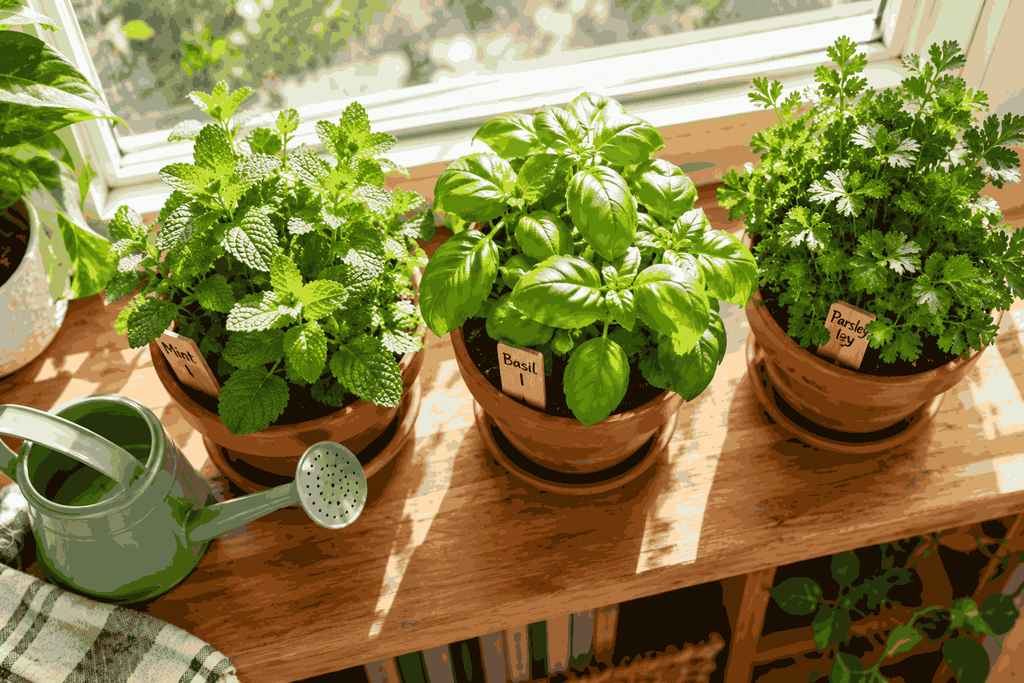
This is one of the best indoor house garden ideas for first-timers. Mint, basil, parsley, and coriander grow well in small pots on a bright windowsill. You get fresh leaves for cooking and tea, and you can see your plants every day.
Short on space? Hang your plants. Pothos, spider plants, and philodendrons look beautiful in hanging baskets near a window. They grow long vines, so they fill a room without using any floor or table space.
Not every home gets strong sun. Snake plants and ZZ plants handle dim rooms and forget-to-water weeks very well. Put one in a bedroom corner or beside a sofa and it will need very little attention.
Use a bookshelf or a simple wooden rack near a window and fill it with small pots. Mix tall plants at the back with small ones in front. Group plants with similar water needs together so care stays simple.
If your bathroom has a window, it can be a great place for ferns and peace lilies. They like the extra moisture from showers. If the room is very dark, skip this idea.
Aloe vera loves bright light and needs very little water, which makes it a great starter plant. Many people use the gel from its leaves on their skin. If you try it, test a small patch first, because some skin reacts to fresh gel. Lavender also looks lovely, but it needs a lot of sun, so only try it near your brightest window.
Some plants grow in a jar of water with no soil at all. Pothos cuttings, lucky bamboo, and philodendron cuttings root easily this way. It is cheap, clean, and fun to watch the roots grow.
| Plant | Light Needed | Watering | Difficulty |
|---|---|---|---|
| Pothos | Low to bright indirect | Every 1-2 weeks | Very easy |
| Snake plant | Low to bright | Every 2-3 weeks | Very easy |
| ZZ plant | Low to medium | Every 2-4 weeks | Very easy |
| Spider plant | Medium to bright | Every 1-2 weeks | Easy |
| Aloe vera | Bright, some direct sun | Every 2-3 weeks | Easy |
| Mint | Bright | Keep slightly moist | Easy |
| Peace lily | Low to medium | Weekly | Easy |
Watering times are only a guide. Always check the soil first, because room temperature and season change how fast soil dries.
Some popular houseplants can make cats, dogs, or small children sick if chewed. Pothos, peace lily, and aloe vera are all on the list of plants to keep out of reach. The ASPCA keeps a full list of toxic and non-toxic plants that is worth checking before you buy. Spider plants are one common option listed as non-toxic.
You do not need to spend hours. Try this once a week:
That is about ten minutes, and your plants will thank you.
Starting an indoor garden does not need a big budget or a green thumb. Pick one or two easy plants, give them the right light, and water carefully. Use these indoor house garden ideas as a starting point, and slowly build a space that feels like yours. Every gardener has lost a plant or two, so do not give up. Once your first plant grows a new leaf, you will want to grow more.
Sign up for my newsletter to see new photos, tips, and blog posts.