
If you’ve ever bitten into a blueberry that was picked minutes ago instead of shipped from three states away, you already know why people bother growing them at home. They taste completely different. The good news is that blueberry bushes aren’t fussy once you understand what they actually want and the bad news is that most of the advice floating around online makes it sound way more complicated than it needs to be.
So here’s the honest, practical version of how to care for blueberry plants, based on what actually matters.
Blueberries want sun. A lot of it. Aim for 6 to 8 hours of direct sunlight a day. You can technically grow them in partial shade, but don’t expect much fruit the bush will survive, it just won’t bother producing much. Also try to give it some breathing room from other plants; good airflow keeps fungal problems away later on.
Here’s the part that trips up almost everyone. Blueberries need acidic soil somewhere between 4.5 and 5.5 on the pH scale. Most backyard soil sits closer to neutral, which is exactly why so many first-time growers end up with a sad, yellow-leafed bush and no idea why.
Before you plant anything, grab a cheap soil pH tester from a garden center. If your soil’s too alkaline, work in some peat moss, elemental sulfur, or an acidic compost to bring it down. Don’t expect this to happen overnight soil pH shifts gradually, not in a week.
One more thing: good drainage matters just as much as acidity. Blueberries hate soggy roots, but they also sulk if the soil dries out completely. It’s a balance.
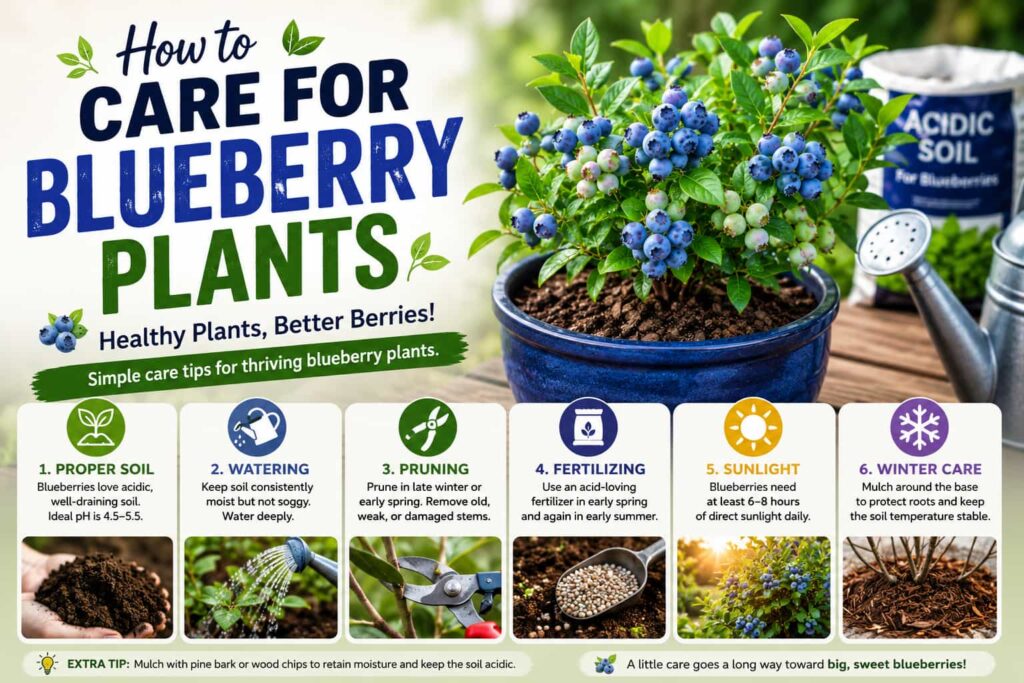
Because blueberry roots are shallow, they dry out faster than you’d expect. Roughly 1 to 2 inches of water a week is a decent baseline, and you’ll want to water more during hot spells or when the fruit is developing.
A layer of mulch pine bark, wood chips, even straw makes a real difference here. It keeps moisture locked in, protects the roots from temperature swings, and slowly breaks down to help keep the soil acidic. Honestly, mulch is one of those small habits that saves you a lot of guesswork.
Skip regular all-purpose fertilizer. Look for one made for acid-loving plants (the kind sold for azaleas or rhododendrons usually works fine). Feed lightly in early spring, then again once you’ve finished harvesting for the season. Resist the urge to feed more than that too much nitrogen just gives you a bushy plant with disappointing fruit.
For the first two or three years, mostly leave the plant alone. Once it’s established, prune in late winter while it’s still dormant. You’re mainly getting rid of:
This isn’t about shaping the bush to look neat it’s about redirecting the plant’s energy toward branches that’ll actually give you fruit.
| Care Factor | What to Aim For |
|---|---|
| Sunlight | 6–8 hours of direct sun |
| Soil pH | 4.5 – 5.5 (acidic) |
| Watering | 1–2 inches per week |
| Fertilizer | Acid-loving plant formula, spring & post-harvest |
| Mulch | 2–3 inches of pine bark, wood chips, or straw |
| Pruning | Late winter, starting year 2–3 |
| Harvest Window | Early to late summer, depending on variety |
A few things come up often enough that they’re worth mentioning:
If you’re already dealing with other backyard fruit, it’s worth glancing at our piece on caring for raspberry bushes, since the soil needs overlap quite a bit. And if pests keep showing up no matter what you do, our natural pest control guide covers a few organic fixes worth trying before reaching for anything harsh.
For research-backed details beyond the basics, the University of Minnesota Extension and NC State Extension both have solid, practical guides written for home gardeners rather than commercial farms.
Get the soil acidic, keep the sun plentiful, don’t let the roots dry out, and prune once the plant’s mature enough to handle it. That’s really most of it. Blueberry bushes can keep producing for well over a decade with barely any effort once they’re settled in the hard part is just getting the first year or two right.
How long before a blueberry plant actually gives fruit? Usually 2 to 3 years for a small first harvest, with the plant hitting its stride around year 4 or 5.
Can I grow blueberries in a pot instead of the ground? Yes just use a container at least 18–20 inches wide with acidic, well-draining potting mix. It’s actually a solid option if your yard’s soil isn’t cooperating.
Do I need more than one blueberry plant to get fruit? Some varieties self-pollinate fine on their own, but planting two different varieties nearby usually means a bigger, better harvest.
Why are my blueberry leaves turning red before fall? If it’s happening in autumn, that’s just natural color change. Earlier in the season, though, it usually points to stress cold snaps, drought, or a nutrient gap.
When’s the best time to actually plant blueberries? Early spring or fall, once the soil’s workable, gives the roots enough time to settle before summer heat or winter cold hits.
Sign up for my newsletter to see new photos, tips, and blog posts.