
A lot of people assume blueberries are strictly a “big backyard” fruit something you need rows of land for, like a mini orchard. That’s just not true anymore. Plant breeders have spent years developing compact and dwarf varieties specifically for people who don’t have much room to work with, and honestly, some of them do better in pots than they would stuck in the ground.
If you’ve got a sunny balcony, a small patio, or even just a wide windowsill, you can grow blueberries. It takes a bit of patience and the right setup, but it’s far more doable than most people think.
Here’s the thing blueberry roots are shallow. They don’t dig deep into the soil like a lot of fruit trees do; instead they spread out sideways, close to the surface. That’s actually good news for container growing, because it means you don’t need a deep pot, just a wide one.
They’re also just nice plants to have around even before the berries show up. Little white flowers in spring, dense green leaves through summer, and then the foliage turns a deep red in fall. So even in a slow year for fruit, they’re not doing nothing for your space.
Not every blueberry bush is built for container life, so this step matters more than people think. Some of the better small-space options:
If your local nursery doesn’t carry these exact names, just ask for “dwarf” or “patio” blueberry varieties most garden centers know what that means.
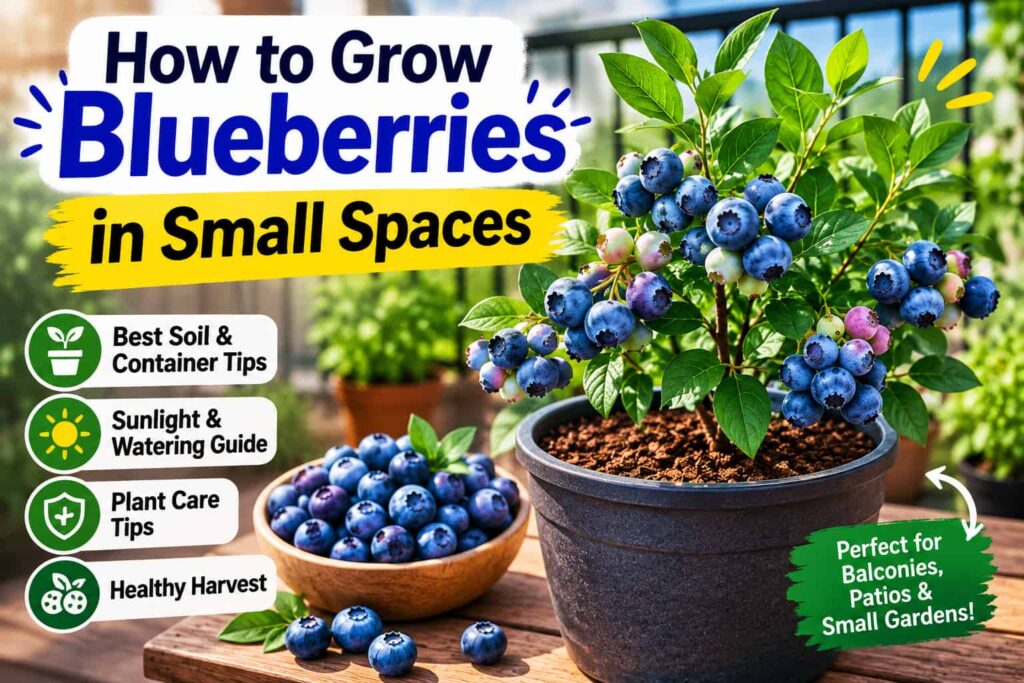
Start with a wide pot, not a deep one. Something around 18-24 inches across is plenty. Drainage holes are non-negotiable blueberries hate sitting in wet soil.
Get the soil acidic. This is where most first-time growers trip up. Regular potting mix is nowhere near acidic enough. Blueberries want a pH somewhere between 4.5 and 5.5, so you’ll need a mix made for acid-loving plants, or blend your own using peat moss, pine bark, and a little compost.
Give it real sun. At least six hours of direct sunlight a day. A south-facing spot is usually your best bet if you’re working with a balcony.
Water like you mean it, but don’t drown it. The soil should stay damp, not soaked. Containers dry out fast, especially in summer heat, so check every couple of days rather than sticking to a fixed schedule.
Feed it something meant for acid lovers the same type of fertilizer you’d use on azaleas works fine here. A light feeding in early spring and another after harvest is usually enough.
Prune once a year. Late winter, before new growth kicks in. You’re not trying to reshape the whole plant, just clearing out old or crossing branches so the bush can put energy into fruit instead.
| Factor | What You Need |
|---|---|
| Pot size | 18–24 inches wide, good drainage |
| Soil pH | 4.5–5.5 (acidic) |
| Sunlight | 6+ hours direct sun |
| Watering | Consistently moist, never soggy |
| Fertilizer | Acid-loving plant formula |
| Pruning | Once yearly, late winter |
| Good varieties | Top Hat, Sunshine Blue, Northsky, Patriot |
| First harvest | Usually year 2, better by year 3 |
Regular potting soil is probably the biggest one it’s just too alkaline, and the plant will sit there sulking without anyone knowing why. Overwatering is a close second; soggy roots rot fast, and by the time you notice, the damage is done.
A lot of people also skip having a second plant nearby. Most blueberry varieties are technically self-pollinating, but they fruit noticeably better with a second bush close by for cross-pollination even in containers. And don’t skip mulch. A layer of pine bark or straw on top of the soil keeps moisture in and saves you from watering twice a day in July.
If you’ve got room for two pots instead of one, do it the pollination boost is worth the extra space. Rotate your containers now and then so every side of the plant gets some sun, not just the side facing the window. And if floor space is genuinely tight, tiered plant stands or hanging arrangements can free up a surprising amount of room.
If you’re already experimenting with other container plants, the soil and watering logic here overlaps a lot with growing vegetables in pots worth checking our guide on container vegetable gardening for small spaces if that’s on your radar too.
Can blueberries actually grow in pots on a balcony? Yes, and quite well, as long as the pot is wide enough, the soil is acidic, and it gets enough direct sun.
How long before a blueberry plant actually gives you fruit? Usually you’ll see a small harvest by the second year, with a fuller yield by year three. It’s not an instant-gratification plant.
Do I really need two blueberry bushes? Not strictly, since most varieties self-pollinate. But a second plant nearby almost always means more and bigger berries.
What soil pH should I be aiming for? Somewhere between 4.5 and 5.5. A cheap soil test kit from any garden store will tell you where you’re starting from.
Will container blueberries survive winter outside? They can, but container roots are more exposed to cold than roots in the ground. Wrapping the pot or moving it somewhere sheltered in winter goes a long way.
You don’t need a yard to get a decent blueberry harvest just a sunny spot, a wide enough pot, and soil that’s actually acidic. Pick a dwarf variety, stay consistent with watering and feeding, and don’t be surprised if it takes a couple of seasons before you’re picking real fruit. That’s normal, not a sign you did something wrong.
For more on soil pH testing and adjustment, the Oregon State University Extension Service and the University of Maine Cooperative Extension’s blueberry guide are both solid, practical resources.
Internal link suggestion: link this post to related content like “Best Fruits to Grow in Containers” or “How to Test and Adjust Soil pH at Home” on your own site.
Sign up for my newsletter to see new photos, tips, and blog posts.