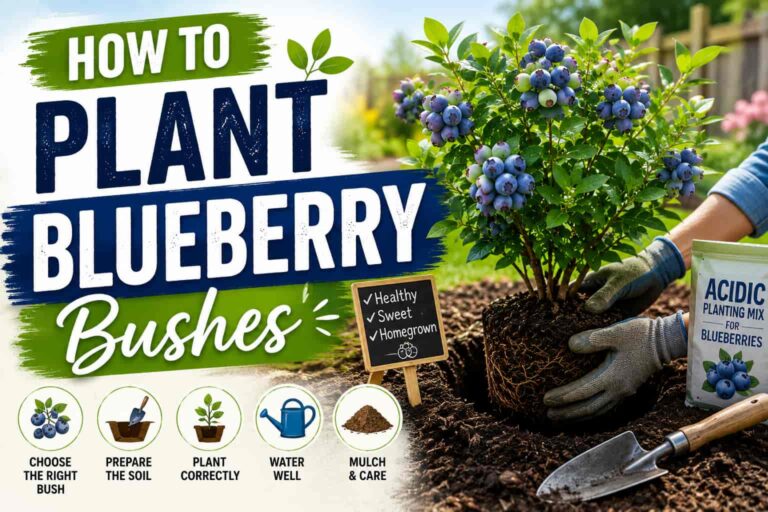

If you’ve got a patio, a balcony, or even just a sunny corner of concrete, you can grow blueberries. People tend to think fruit bushes need a proper garden, but blueberries are actually one of the more container-friendly plants out there mostly because they’re fussy about soil acidity, and that’s something you can control way better in a pot than you ever could in open ground.
This guide covers what actually matters: picking the right container, getting the soil right, and keeping the plant alive long enough to fruit.
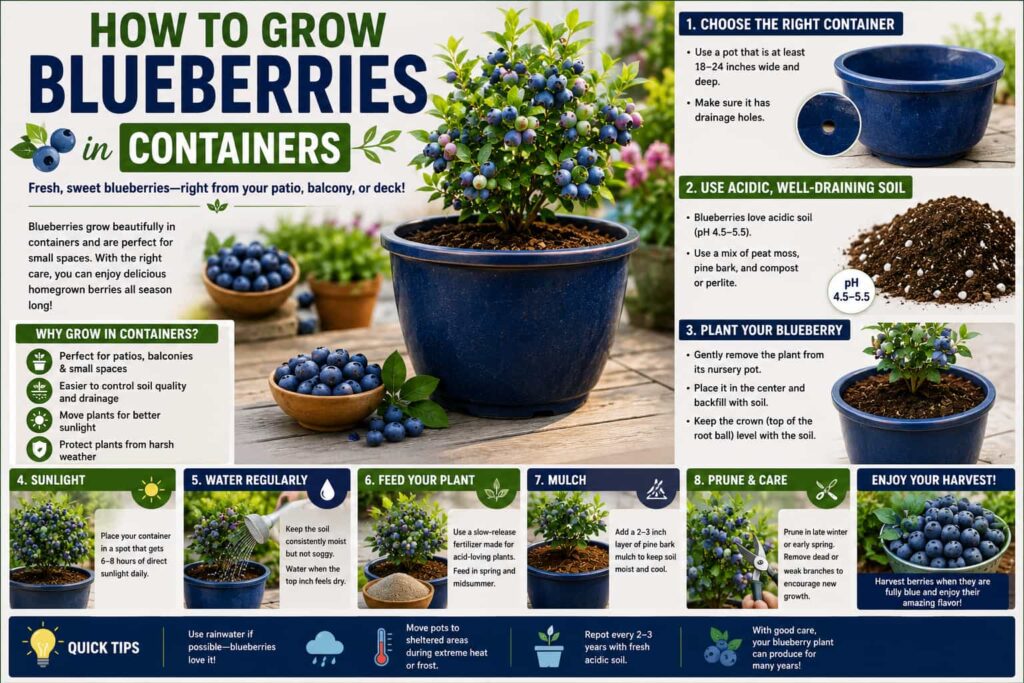
Blueberries need acidic soil, somewhere in the pH 4.5–5.5 range. Most yards don’t have naturally acidic soil, and trying to adjust it in the ground is a slow, frustrating process. In a container, you skip all of that you just fill it with a mix the plant already likes.
A few other reasons containers make sense:
Skip the tall, spreading varieties they need real garden room. For pots, look for dwarf or half-high types bred to stay compact.
| Variety | Mature Size | Climate Fit | Self-Pollinating? |
|---|---|---|---|
| Top Hat | 12–24 in | Any (very adaptable) | Yes |
| Northsky | 18–24 in | Cold winters | Yes |
| Jelly Bean | 12–18 in | Warm to moderate | Yes |
| Sunshine Blue | 24–36 in | Warm climates | Yes |
| Patriot | 36–48 in | Cooler regions | Yes |
For a first attempt, Top Hat or Jelly Bean are hard to go wrong with both were basically bred for container life.
Before planting anything, gather these:
Start with the container. Size matters more here than most people expect a pot that’s too small will choke root growth within a season or two. Go bigger than you think you need.
Next, sort out the soil. This is where most container blueberries fail. Standard potting soil is too alkaline, and it’ll show up as yellowing leaves and weak growth within weeks. Use a mix built for acid-loving plants, or blend your own with peat moss and fine pine bark.
When you plant, dig a hole roughly the size of the root ball, set the plant so it sits at the same depth it was in its nursery pot, and backfill without compacting the soil too tightly the roots need air pockets to spread into.
Water it in immediately, deeply enough that water runs out the drainage holes. After that, the goal is steady moisture not swampy, not dry.
Finish with a layer of mulch, about 2–3 inches, to hold moisture and moderate soil temperature.
Then place the pot somewhere it’ll get plenty of direct sun. Partial shade won’t kill the plant, but it will noticeably cut down on fruit.
Watering is the one thing that catches people off guard containers dry out much faster than garden soil, sometimes daily in hot weather. Get in the habit of checking the top inch of soil rather than watering on a fixed schedule.
Feed the plant every 4–6 weeks during the growing season using a fertilizer meant for acid-loving plants the same kind used for azaleas or rhododendrons works well here too.
Once your plant is a couple of years old, prune out dead, crossing, or weak branches in late winter. It’s not strictly necessary early on, but it keeps mature plants productive.
Plan to repot every 2–3 years as roots fill out the container sizing up gives the plant room to keep growing instead of stalling out. If you’re managing several potted fruit plants, our guide on choosing containers for fruit trees has more detail on matching pot size to root growth.
In colder climates, move pots somewhere sheltered against a wall, in an unheated garage, or wrapped in burlap once temperatures drop well below freezing.
| Symptom | Likely Cause | Fix |
|---|---|---|
| Yellowing leaves with green veins | Soil pH too high (iron deficiency) | Apply sulfur or acidic fertilizer |
| Few or no berries | Insufficient sunlight or pollination | Relocate to full sun, add a second variety |
| Wilting despite watering | Root rot from poor drainage | Repot with better-draining mix |
| Stunted, slow growth | Container too small | Move to a larger pot |
If insects become a recurring problem once fruit sets, check our post on natural pest control methods for potted plants for non-chemical options.
For research-backed details on soil pH and blueberry nutrition, Oregon State University’s Extension Service is a solid reference that applies just as well to container setups as garden beds.
How long does a container-grown blueberry plant take to fruit? Typically 2 to 3 years, though a nursery plant that’s already a year or two old may give you a small harvest sooner.
Is it possible to keep blueberries indoors permanently? Not really they need direct sunlight and outdoor conditions for pollination and healthy growth. Indoors works only as a temporary or seasonal setup.
What’s the minimum container size for blueberries? Aim for at least 18–24 inches in both width and depth, sizing up as the plant matures.
Do container blueberries need a second plant nearby for pollination? Most container varieties are self-pollinating, but planting two different varieties tends to improve yield and berry size through cross-pollination.
What kind of soil works best in containers? An acidic mix, pH 4.5–5.5, made from peat moss and pine bark. Regular potting or garden soil is usually too alkaline on its own.
Growing blueberries in containers really comes down to one main thing: getting the soil acidity right from the start. Everything else sun, watering, feeding is fairly standard fruit-plant care. Pick a compact variety, use the right mix, keep it watered and fed, and within a couple of seasons you’ll have a container full of fresh blueberries with no garden bed required.


Sign up for my newsletter to see new photos, tips, and blog posts.