

If you’ve ever paid $6 for a small plastic box of blueberries at the grocery store, you already know why growing your own is worth the effort. A single healthy bush can quietly produce fruit for two decades, and once it’s established, it barely asks for anything. The tricky part isn’t the maintenance it’s getting the setup right in the beginning. Get the soil and location wrong, and no amount of care later will fix it. Get it right, and you’ll be picking berries by the handful every summer for years.
Here’s what actually matters if you want to grow blueberries in your backyard, without wasting a season figuring it out the hard way.
This is where a lot of people go wrong they buy whatever’s on sale at the nursery without checking if it even suits their region.
One thing worth knowing: planting two different varieties that flower around the same time usually gives you a bigger, better harvest, thanks to cross-pollination. Even “self-fruitful” varieties tend to produce more when there’s another plant nearby.
Blueberries are picky about one thing in particular: acidity. They want soil with a pH somewhere between 4.5 and 5.5. Most backyard soil sits closer to neutral, which is a problem, because blueberries planted in the wrong pH will just sit there, sulking, never really taking off.
Before you plant anything, it’s worth testing your soil. We’ve got a step-by-step soil pH testing guide if you haven’t done this before it takes maybe ten minutes and saves you a lot of frustration later.
Beyond pH, look for a spot with at least 6 hours of sun and soil that drains well. Blueberries hate wet feet. Mixing peat moss, compost, or pine bark into the planting area helps recreate the loose, acidic conditions they naturally grow in.
| Requirement | Recommended Range |
|---|---|
| Sunlight | 6–8 hours direct sun |
| Soil pH | 4.5–5.5 |
| Spacing | 4–5 feet apart |
| Watering | 1–2 inches per week |
| Mulch depth | 2–4 inches |
| First real harvest | Year 2–3 |
| Mature height (highbush) | 4–6 feet |
Early spring or early fall both work fine for planting, as long as you’re past any hard frost risk.
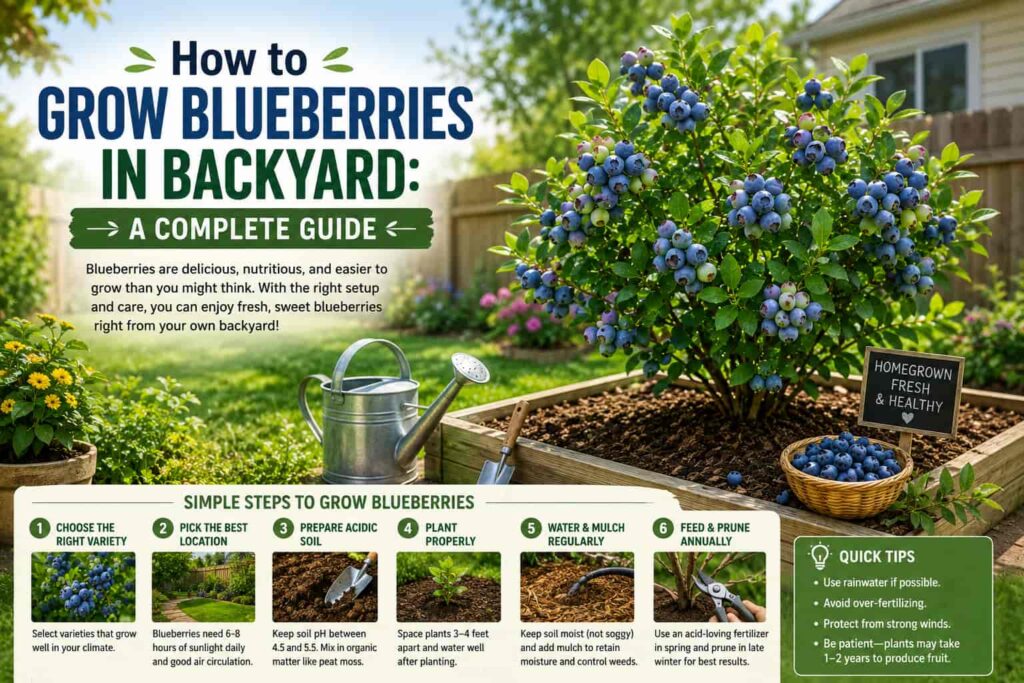
Blueberry roots stay close to the surface, so they dry out faster than you’d expect. Aim for about an inch or two of water a week, and more when it’s hot. Skip the “deep soak once a week” advice you might’ve heard for other plants consistency matters more here than depth.
Mulch does a lot of the heavy lifting too. A layer of pine bark or shredded wood keeps moisture in, keeps roots cool, and slowly feeds the soil as it breaks down.
Hold off on fertilizer entirely during the first year young roots can’t handle much and you’ll do more harm than good. From year two onward, use a fertilizer made for acid-loving plants, applied in early spring. Stay away from anything high in nitrates, and if the plant needs potassium, go with potassium sulfate instead of potassium chloride, since chloride isn’t great for blueberry roots.
Pruning feels intimidating, but it’s not complicated once you understand the logic: cut out the oldest, least productive canes each winter to make room for new growth. For the first couple of years, you barely need to touch the plant beyond removing anything dead or damaged. Once it matures, though, regular pruning is what keeps the harvest coming instead of tapering off.
Blueberries don’t ripen after you pick them, so timing actually matters. Wait until the berry is fully blue and comes off with barely a tug if it resists or still has a reddish tint near the stem, leave it another day or two. Picking in the morning, once the dew’s dried off, tends to give better flavor and longer shelf life than afternoon-picked fruit. A well-established bush can give you several pounds a season, more than enough for fresh eating, freezing, or a batch of homemade blueberry jam.
How long before a blueberry bush actually produces fruit? Usually 2–3 years for a decent harvest, with things really picking up by year 4 or 5.
Can blueberries grow in pots if I don’t have garden space? Yes use a large container (15–20 gallons or more) with an acidic potting mix. It’s actually easier to control the soil pH this way.
Do they really need full sun, or can they handle some shade? Full sun is best. They’ll survive part shade, but you’ll notice fewer, smaller, less sweet berries.
How often should new plants be watered? Two to three times a week for the first season, keeping the soil moist but never soggy.
Why do my blueberry leaves look yellow with green veins? That’s iron chlorosis, almost always caused by soil pH being too high. Lower the pH and the leaves usually green back up within a few weeks.
There’s no real trick to growing blueberries in your backyard just get the soil acidic enough, give them sun, water consistently, and prune when they’re mature. Do that, and the bush pretty much takes care of the rest for the next twenty years.
Sources referenced:



Sign up for my newsletter to see new photos, tips, and blog posts.