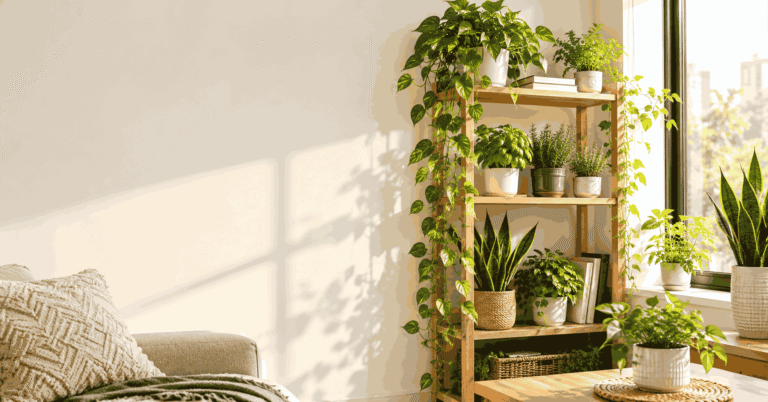

You bought a plant, you got home excited, put it on the windowsill, and three weeks later it’s looking… not great. Sound familiar? Honestly, almost every plant parent has been there at least once — myself included, more times than I’d like to admit.
Indoor plant care isn’t actually that complicated once you get past the initial trial and error, but there’s a learning curve nobody warns you about when you’re standing in the nursery buying your first pothos. Let’s go through what actually matters so your houseplants stop looking sad on your windowsill.
A friend of mine killed four succulents in a row before figuring out she was watering them like regular houseplants — turns out succulents pretty much hate that. She’s not alone. Most plant deaths come down to a handful of repeated mistakes: overwatering, wrong light, or just not knowing what a specific plant actually wants compared to what you assume it wants.
Plants don’t come with instruction manuals taped to the pot, unfortunately, so a lot of beginners end up treating every green thing the same way. Which, honestly, is kind of how I started too — watering everything on Sundays whether it needed it or not.
This is probably the single most overlooked part of houseplants care, and it’s also the easiest to get wrong without realizing it.
Before buying a plant, walk around your space and actually watch where the sun lands at different times of day. A spot that looks bright at noon might be completely dim by evening, and that matters more than people think when picking what’ll actually survive there.
Here’s something that surprised me when I first started — there’s basically no universal watering schedule that works across different plants. Every plant guide that gives you a strict “water every Tuesday” rule is kind of lying to you, since it depends entirely on the plant, the pot, the season, and your home’s humidity.
The better approach is checking the soil before watering rather than the calendar. Stick a finger an inch or two down; if it’s still damp, wait. Succulents and cacti want to dry out almost completely between waterings, while tropical plants like pothos and peace lilies prefer staying slightly moist. Overwatering is honestly the most common way beginners accidentally kill plants — root rot sets in quietly, and by the time you notice yellowing leaves, the damage is usually already done.
Winter throws another wrinkle into things too. Most indoor plants slow their growth significantly when it’s cold, meaning they need noticeably less water than in summer, even if your apartment heating makes the air feel dry.
Beyond light and water, a few smaller habits genuinely add up over time. Wipe dust off leaves occasionally — it sounds minor, but dusty leaves struggle to photosynthesize, and clean leaves just look healthier too. Rotate your plants every couple of weeks so they grow evenly instead of leaning hard toward whatever window they’re chasing.
Humidity matters more than most beginners expect, especially for tropical plants that originally come from rainforest-type environments. A pebble tray with water underneath the pot, or just grouping plants closer together, can bump up local humidity without needing a fancy humidifier.
Yellow leaves usually mean overwatering, though they can occasionally signal the opposite if the plant’s gone completely dry for too long. Brown, crispy edges typically point to low humidity or too much direct sun. Drooping that bounces back after watering is just thirst — drooping that doesn’t bounce back might mean root problems you can’t see.
Honestly, the fastest way to learn plant health signals is paying attention regularly rather than panicking only when something looks obviously wrong. Catching issues early, like the first yellow leaf instead of the fifth, makes recovery much easier.
You don’t need an elaborate daily ritual, just a few small habits that add up. Glance at your plants each morning while making coffee — check soil moisture, spot any obvious stress, notice if something looks off compared to yesterday. Once a week, rotate pots and wipe down dusty leaves. Once a month, check if anything’s outgrown its pot or needs a light feed during growing season. That’s genuinely most of it.
Indoor plant care comes down to understanding what each specific plant actually wants instead of treating every green thing identically, which is honestly the mistake almost everyone makes starting out. Pay attention to light before you buy, water based on the soil rather than a fixed schedule, and watch for early warning signs before they turn into real problems. Give yourself permission to kill a plant or two while you’re learning — most plant parents have a graveyard of past mistakes, and that’s just part of figuring out what works in your space.
1. How often should I water my indoor plants? There’s no single answer since it depends on the plant, pot size, and season, but checking soil moisture with your finger works better than following a fixed schedule. Most houseplants prefer the top inch or two drying out between waterings.
2. What’s the easiest indoor plant for a complete beginner? Snake plants and ZZ plants are about as forgiving as it gets — they tolerate low light, irregular watering, and general neglect better than almost anything else on the market.
3. How do I know if my plant is getting too much or too little light? Leggy, stretched-out growth usually means too little light, while scorched or bleached patches on leaves point to too much direct sun. Healthy growth with full, even leaves is a decent sign you’ve got it right.
4. Why do my plant’s leaves keep turning yellow? Overwatering is the most common cause, though underwatering and natural aging of older leaves can also cause yellowing. Check the soil moisture first before assuming the worst.
5. Do indoor plants need fertilizer, or is water enough? Plants do benefit from occasional feeding, especially during active growing seasons, though it’s not usually necessary in winter when growth slows down. A diluted houseplant fertilizer every month or so during spring and summer covers most basic needs.
Sign up for my newsletter to see new photos, tips, and blog posts.