
You’ve got maybe 40 square feet of concrete, a railing, and a serious craving for something green in your life. Sound familiar? Living in a city apartment doesn’t exactly scream “garden,” but honestly, that tiny balcony of yours has way more potential than you’re giving it credit for.
Balcony gardening has become a bit of an obsession for a lot of apartment dwellers lately, and it’s not hard to see why. You don’t need acres of land — just some smart planning, a few good containers, and plants that actually want to grow in tight spaces.
City living usually means trading outdoor space for convenience, and most people just accept that as the deal. But a balcony, even a small one, can become a genuinely productive garden if you set it up right. My neighbor turned her 6×4 balcony into something that produces enough herbs and cherry tomatoes that she barely buys either anymore.
There’s also something calming about having plants around, especially when you live somewhere loud and concrete-heavy. A balcony garden gives you a slice of nature without needing a yard or much money at all.
Not every plant belongs on a balcony. Some need way more room than you’ve got, and others just sulk in containers no matter what you do. Here’s what tends to actually thrive in small urban setups:
The trick is picking plants based on how much sun your balcony actually gets, not how much you wish it got. A north-facing balcony in Karachi summers is a different beast than a south-facing one — be honest with yourself about your light situation before falling for every plant on Pinterest.
Containers are basically your soil, your garden bed, and your only real limitation, all rolled into one.
Bigger isn’t always better, but it usually means less watering. Shallow pots dry out fast in hot weather, so go for the deepest container your space allows. Drainage holes are non-negotiable — without them, you’re basically growing root rot, not plants.
A mix of pot sizes looks more intentional than a row of identical ones. Try grouping three or four different heights together; it creates depth and makes even a small balcony look layered instead of cluttered. Terracotta pots breathe better but dry out quicker, while plastic ones retain moisture longer — which matters more depends entirely on your climate.
This is where balcony gardening gets genuinely creative. When you can’t go wider, you go up.
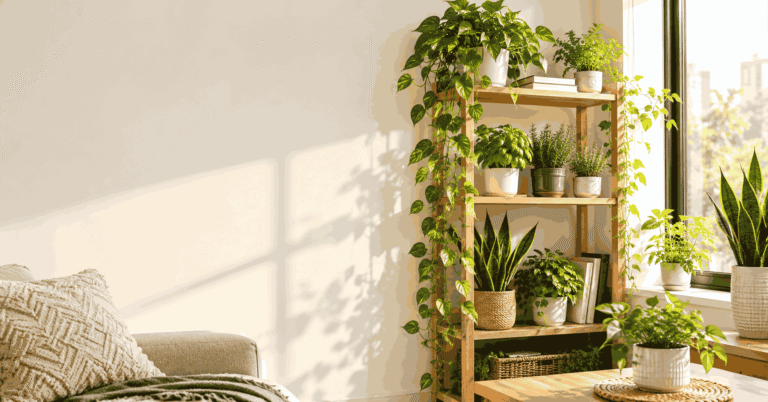
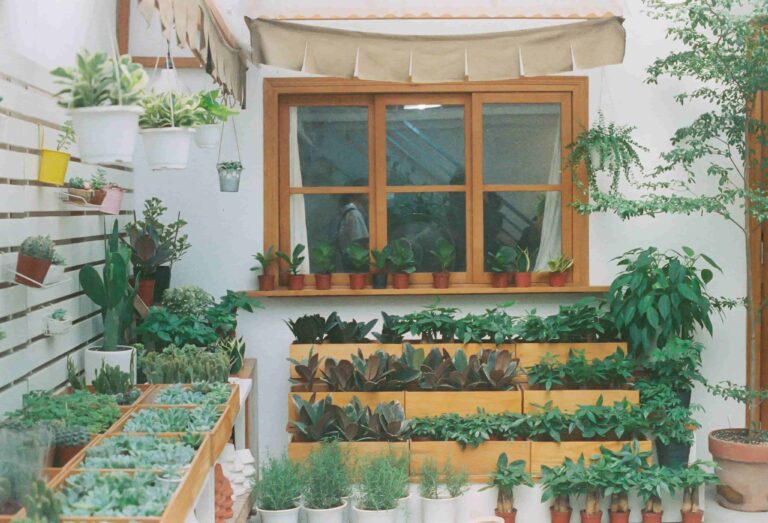
Wall-mounted planters turn a bare railing or wall into actual growing space without eating into your floor area. Hanging baskets work great for trailing plants like cherry tomatoes or strawberries, and they free up the ground for bigger containers. A simple tiered plant stand can triple your growing area in the same footprint as a single large pot would take.
I’ve seen people build entire pallet gardens against a balcony wall — repurposed wood, a few pockets stuffed with soil, and suddenly there’s a dozen herb plants living happily in something that used to be trash. It’s not fancy, but it works, and it costs next to nothing.
Plant pots aren’t just containers — they’re basically deciding how much work you’re signing up for. Self-watering pots are a genuine lifesaver if you travel often or just tend to forget things. They hold a water reservoir at the bottom that wicks moisture up as needed.
Material matters more than people think. Metal pots heat up fast under direct sun and can cook plant roots in peak summer — worth keeping in mind if your balcony gets full afternoon sun. Fabric grow bags, on the other hand, are lightweight, foldable when not in use, and surprisingly good for root health since they prevent roots from circling endlessly like they do in plastic pots.
If you’re starting from absolute zero, here’s roughly how I’d approach it. Start with just two or three pots — overcommitting on day one is how balcony gardens die within a month. Pick plants suited to your actual light conditions rather than your aspirations. Add a vertical element early, even just one hanging basket, since floor space disappears faster than expected. Water consistently rather than heavily; small pots dry out quickly and need lighter, more frequent watering than ground soil does. And give it a few weeks before judging whether something’s working — plants need time to settle in.
A balcony doesn’t need to be big to actually function as a garden — it just needs a bit of thought behind it. Whether you’re growing herbs for your kitchen, a few pots of color, or attempting your first tomato plant, small space gardening is way more doable than most people assume going in. Start small, pay attention to what your specific balcony gives you in terms of sun and space, and adjust as you go. Give it a season, and you’ll probably be surprised by how much you can grow in such a small footprint.
1. What are the easiest plants to grow on a small balcony? Herbs like mint and basil are about as forgiving as it gets, along with succulents if you’re prone to forgetting waterings. Patio-variety cherry tomatoes also do well for beginners.
2. How much sunlight does a balcony garden actually need? Depends what you’re growing — leafy greens manage with partial sun, while tomatoes and most fruiting plants want at least six hours of direct light. Watch your balcony for a day or two before planting anything.
3. Can I do container gardening without drainage holes? You can drill your own holes into most containers, and honestly, you should. Without proper drainage, water sits at the bottom, and roots start rotting within weeks.
4. Are vertical gardens hard to maintain compared to regular pots? Not really, though they dry out a bit faster since they’re more exposed to air and sun. A regular watering schedule handles this fine — it’s about consistency, not extra effort.
5. How do I start a balcony garden if I’m a complete beginner? Start with two or three easy plants in good containers, pay attention to your light conditions, and resist buying fifteen pots on your first nursery trip. Little, steady progress beats an ambitious setup that gets abandoned in a month.
Sign up for my newsletter to see new photos, tips, and blog posts.