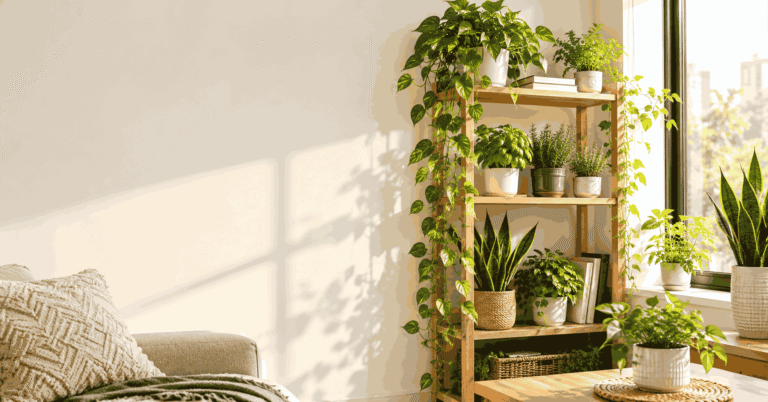

Furniture, paint colors, lighting — that’s usually where people’s heads go first when thinking about a beautiful living space. Indoor plants tend to get treated as an afterthought, almost a decorative garnish. That’s underselling them pretty badly, honestly. A good plant softens hard corners and adds real color that doesn’t fade or go out of style. It also quietly works in the background, scrubbing the air you’re breathing without you noticing any of it happening.
Modern indoor spaces carry more unseen pollutants than most people realize. Synthetic carpet fibers off-gas quietly for years. Cleaning products leave behind residue that lingers in the air longer than the smell does. Add in stagnant airflow, and you’ve got a recipe for indoor air that’s worse than most people assume. Bringing in a few specific air purifying plants is one of the more effective, low-effort ways to push back against that.
If the goal is upgrading your space while also bringing in indoor plants that improve air quality naturally at home, no botany degree required. Here’s a rundown of the varieties that genuinely balance looking good with being easy to keep alive.
The best home decor plants look structural and intentional rather than messy or accidental. A few specific varieties manage to pull that off while doing real filtering work behind the scenes.
The Snake Plant is about as minimalist as houseplants get — sword-like leaves growing straight up, fitting neatly into tight corners or beside a sleek entryway without crowding anything. Most plants only release oxygen during the day, but the Snake Plant keeps going through the night too, while filtering out household toxins like formaldehyde and benzene at the same time. Care-wise, it’s nearly impossible to kill. It actually does better on a bit of neglect, wanting water only once the soil’s gone completely dry.
The Peace Lily brings something the Snake Plant doesn’t — actual blossoms. Deep green, glossy leaves contrast against elegant white flowers that genuinely calm down a living room or home office just by sitting there. It’s excellent at breaking down airborne chemicals and pulling mold spores out of the air. And it communicates pretty clearly when something’s wrong — leaves droop dramatically the moment it gets thirsty, then perk right back up within an hour of a good watering.
Not everyone wants a demanding care schedule, and that’s fine — plenty of resilient, easy care plants deliver the same benefits without punishing a chaotic routine.
The Spider Plant has this cascading, fountain-like look that works beautifully on a high shelf or in a hanging basket. It’s particularly good at clearing carbon monoxide and xylene out of a room, often within just a few days of being introduced. Temperature swings and inconsistent light barely faze it, and every so often it sends out tiny “baby” plants you can snip off and propagate into entirely new pots, basically for free.
Pothos, sometimes called Devil’s Ivy, is the trailing vine that interior designers reach for constantly. Heart-shaped leaves drape down a bookshelf, across a mantlepiece, or climb a moss pole if you want something more vertical. It’s particularly good in freshly painted rooms or newly carpeted spaces, since it excels at stripping out the lingering toxins those release. Lower light doesn’t bother it much, and it only wants water once the top few inches of soil feel properly dry.
Getting real value out of these plants, both visually and for air quality, comes down to a few simple arrangement habits.
Grouping plants tends to look far more intentional than scattering single pots around a room. Odd numbers work especially well — three is a common sweet spot. Pairing a tall, upright Snake Plant with a bushier Peace Lily and a trailing Pothos creates a layered, dynamic little vignette instead of a random scatter of greenery.
Pot choice matters more than people expect for making budget plants look genuinely high-end. Matte ceramic, terracotta, or woven seagrass containers that match existing furniture tones can make an inexpensive plant look like it came from a much pricier shop.
Dust builds up on leaves over time, especially since these plants are actively pulling particles out of the air. Wiping the foliage with a damp cloth roughly once a month keeps them looking shiny and, more importantly, keeps their pores clear enough to keep filtering efficiently.
Which indoor plants are actually best for improving air quality? Snake Plants, Peace Lilies, Spider Plants, and Pothos all rank highly for this. Each targets slightly different pollutants — Snake Plants handle formaldehyde and benzene well, while Spider Plants are particularly strong against carbon monoxide and xylene.
Do I need bright light for these plants to survive indoors? Not really. Most of the varieties mentioned here, especially Pothos and Snake Plants, tolerate lower or indirect light quite well. Bright, direct sun isn’t a requirement for any of them to thrive.
How often should I water low-maintenance houseplants like these? Generally, only once the soil’s properly dried out — checking with a finger works better than sticking to a fixed schedule. Snake Plants and Pothos in particular prefer being slightly underwatered rather than overwatered.
Can these plants really make a noticeable difference in a small apartment? Yes, especially in smaller, less ventilated spaces where pollutants tend to concentrate more. A few well-placed plants in a small apartment can have a more noticeable air-quality effect than the same number scattered through a much larger house.
How do I keep my air-purifying plants actually doing their job over time? Dust accumulation is the main thing to watch. Wiping leaves down monthly keeps pores clear so the plant can keep filtering effectively, rather than just sitting there looking pretty while doing less of the actual work.
Decorating with plants is a reminder that a home shouldn’t just look good on a Sunday afternoon scroll through it — it should actually feel good to spend real time in. Choosing versatile indoor plants that pull double duty gives a space a genuine visual lift while quietly improving the air everyone in that room is breathing daily.
None of this requires a green thumb or years of experience. Pick one or two resilient varieties, find a corner with decent indirect light, and let the plant handle the rest from there.
Sign up for my newsletter to see new photos, tips, and blog posts.